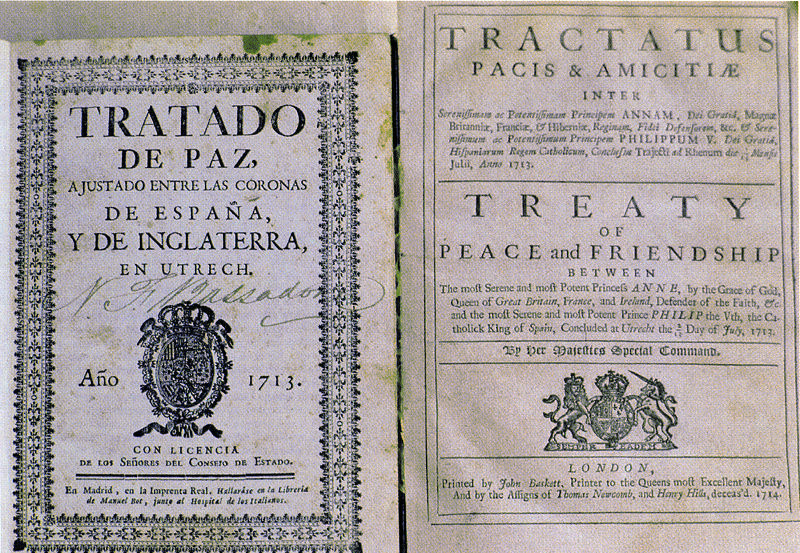
Treaty of Utrecht ends Queen Anne's War, shaping British-French territorial control in North America.
Canada
Political
Global Trade
3 min read
Updated By: History Editorial Network (HEN)
Published:
Following the end of Queen Anne's War, the Treaty of Utrecht was established, solidifying British control over various regions including Hudson Bay, Newfoundland, and Acadia. The treaty also allowed France to retain Cape Breton and the St. Lawrence River Valley. The war, a part of the larger War of Spanish Succession, lasted for over a decade and involved several European powers. With the Treaty of Utrecht, the conflict in the North American territories came to a close.
The agreement marked a significant shift in power dynamics in the region, as the British strengthened their presence in key areas while France retained control over strategic locations. This delicate balance of power would continue to shape colonial relationships and influence future conflicts in the region. The Treaty of Utrecht had lasting implications for the territories involved, setting the stage for continued tensions and struggles for dominance.
The treaty's confirmation of British possession of Hudson Bay, Newfoundland, and Acadia, alongside France's retention of Cape Breton and the St. Lawrence River valley, marked a turning point in the history of the North American colonies. The agreement would influence colonial developments and relationships for years to come, shaping the landscape and trajectory of Canada's history. #TreatyofUtrecht #QueenAnnesWar #BritishPossessions #FrenchTerritories #NorthAmericanColonies
Primary Reference
New France - Wikipedia

Explore the Life Moments of
 AI Twin