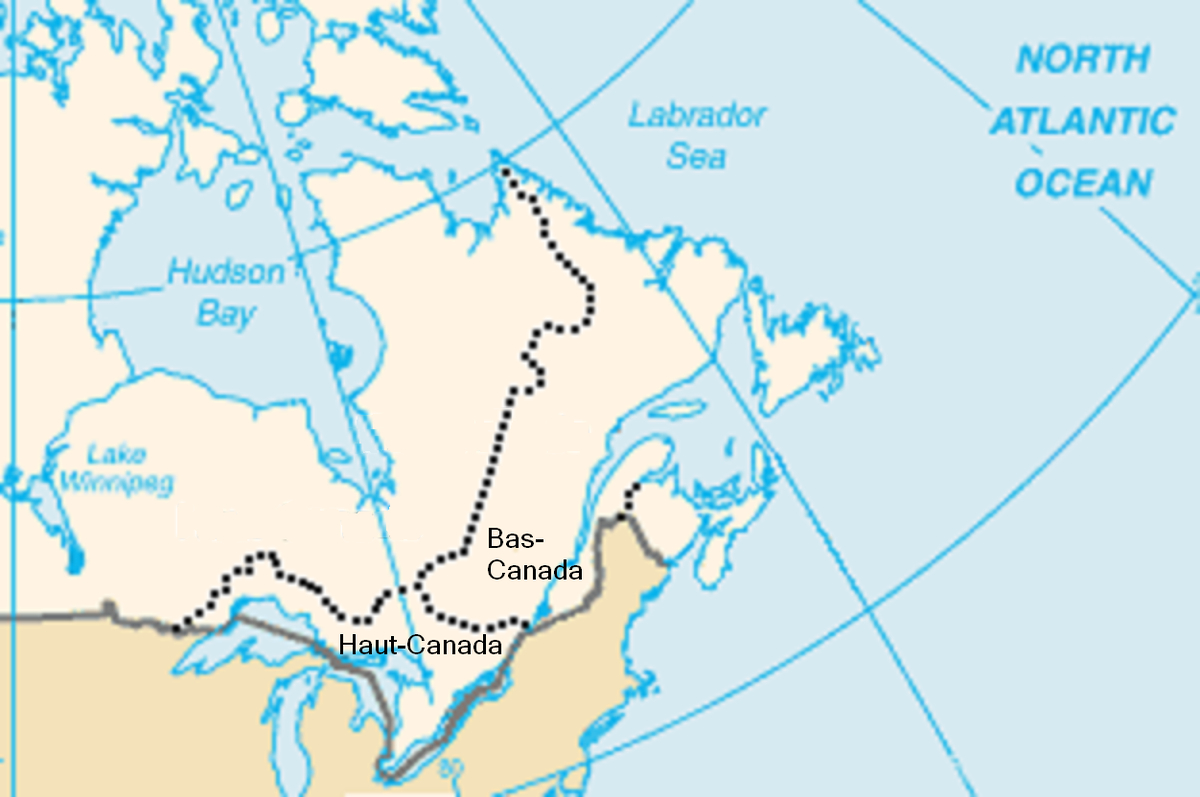
The Constitutional Act of 1791 divides Canada into two separate regions based on language.
Canada
Political
Canadian
3 min read
Updated By: History Editorial Network (HEN)
Published:
In 1791, the Constitutional Act divided the region of Canada into Upper and Lower Canada. Prior to this act, Canada was known as the Province of Quebec, under British control after the Seven Years' War.
The division aimed to address the growing population and cultural differences between English and French settlers. Upper Canada, predominantly English-speaking, sought to establish British institutions and law, while Lower Canada, primarily French-speaking, held onto its French civil law and traditions.
The establishment of separate governments for Upper and Lower Canada allowed for more localized governance and representation, leading to the development of distinct political identities within each region. This division also set the stage for future tensions and conflicts between the English and French populations in Canada.
The Constitutional Act of 1791 laid the groundwork for the future political landscape of Canada, shaping the cultural and linguistic dynamics that continue to influence the country today. It marked a significant moment in Canadian history, reflecting the complexities of governing a diverse and evolving society.
#ConstitutionalAct #DivisionofCanada #CulturalDifferences #PoliticalIdentity #CanadianHistory
Primary Reference
Constitutional Act 1791 - Wikipedia

Explore the Life Moments of
 AI Twin