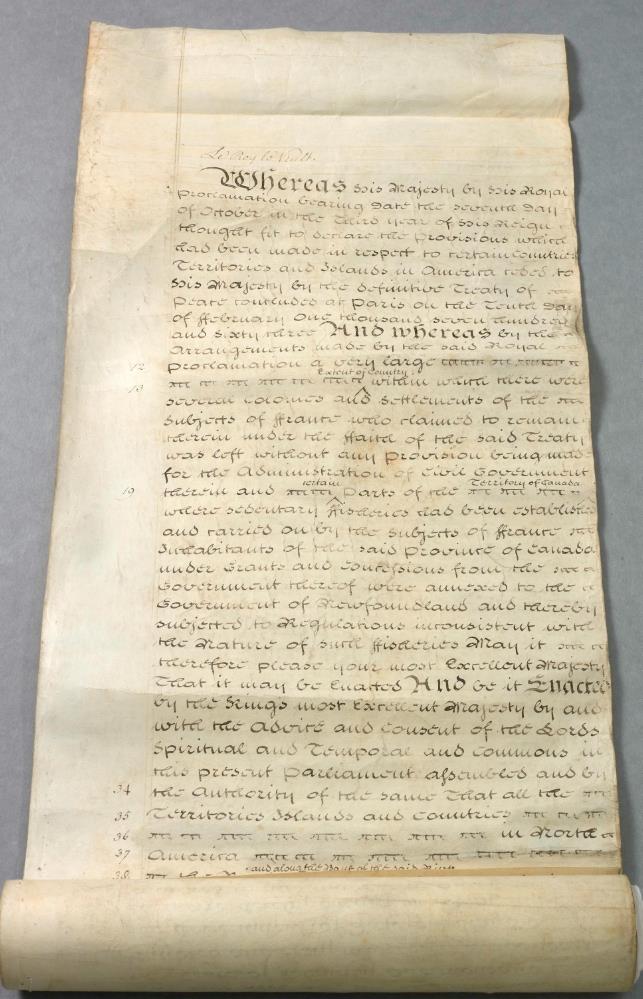
Quebec Act establishes French civil law and Roman Catholic religion in Quebec.
Canada
Political
3 min read
Updated By: History Editorial Network (HEN)
Published:
The Quebec Act was passed, laying down French civil law and the Roman Catholic religion in Quebec. This measure aimed to appease French Canadians and ensure their loyalty following the territory's acquisition by Britain in 1763. The Act allowed the French-speaking population to maintain their legal system and religious practices, fostering a sense of security and cultural preservation within the community.
With the Quebec Act, boundaries of Quebec were also extended to include the Ohio Valley, sparking further tensions with the American colonies. The Act received backlash in the Thirteen Colonies, who saw it as a threat to their own interests and fueled anti-British sentiments in the lead-up to the American Revolutionary War.
The establishment of French civil law and the Roman Catholic religion in Quebec set a precedent for cultural and religious accommodation within the British Empire. This event highlights the complexities of colonial rule and the diverse cultural landscapes that were impacted by imperial decisions. The Quebec Act ultimately shaped the trajectories of Quebec and the surrounding regions, leaving a lasting legacy on Canadian history. #QuebecAct #FrenchCivilLaw #CulturalAccommodation #CanadianHistory
Primary Reference
Quebec Act, 1774 | The Canadian Encyclopedia

Explore the Life Moments of
 AI Twin