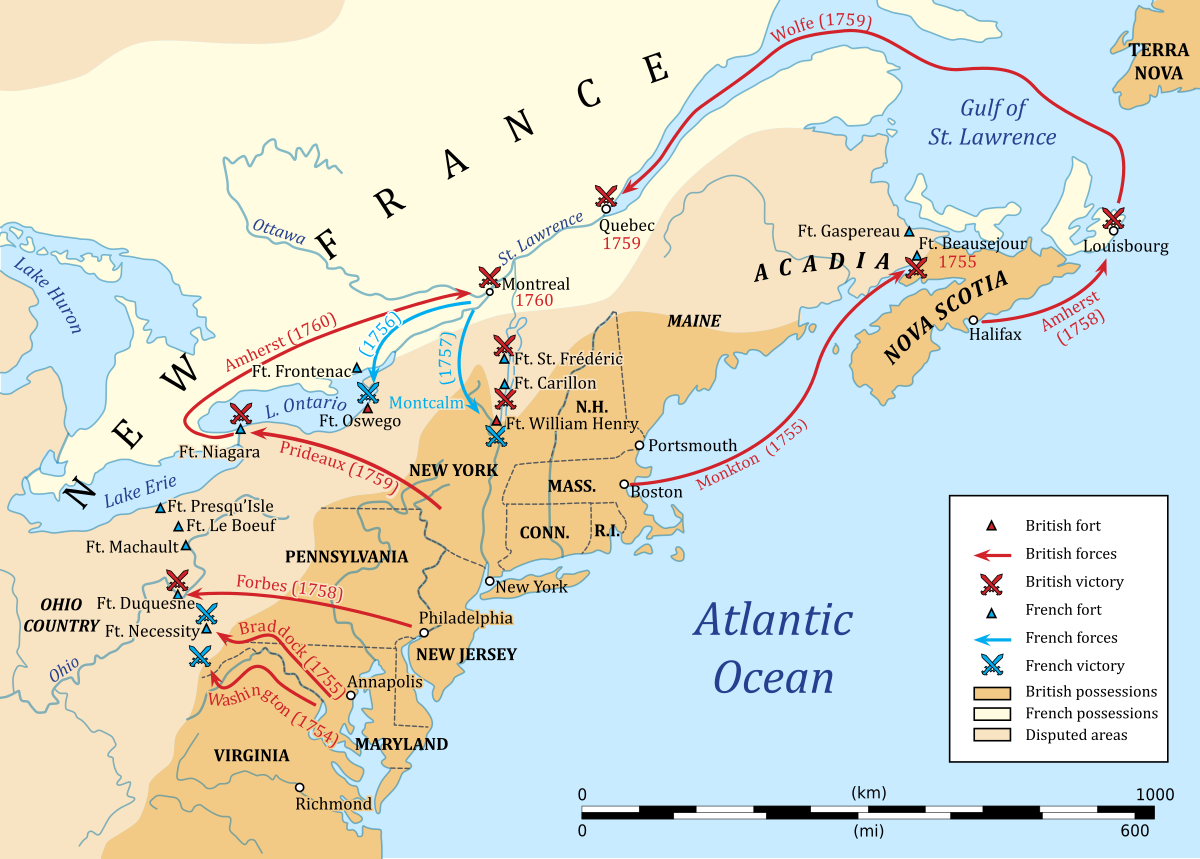
French and Indian War: British and French battle for North American control kicks off.
Canada
Political
3 min read
Updated By: History Editorial Network (HEN)
Published:
In 1754, the French and Indian War commenced, igniting tensions between Britain and France for dominance over North America. The conflict stemmed from rival territorial ambitions, with both nations seeking control of valuable regions including Canada. As the war progressed, indigenous tribes allied with the French, while British colonies in America backed their homeland.
The clash of European powers in North America had lasting repercussions on the continent. The engagement saw brutal battles, such as the renowned Battle of Quebec, shaping the landscape of the region for generations. The conflict was part of the larger global struggle known as the Seven Years' War.
The French and Indian War paved the way for British triumph, leading to the Treaty of Paris in 1763. Under the treaty, France ceded its Canadian territories to Britain, altering the geopolitical landscape of North America. The war also amplified lingering tensions between settlers and indigenous populations, exacerbating conflicts that would persist long after the war's end.
This pivotal event marked a significant chapter in Canadian history, reshaping power dynamics and territorial control in the region for years to come. It laid the groundwork for future conflicts and alliances, setting the stage for the development of modern North America. #FrenchandIndianWar #CanadaHistory #GeopoliticalConflict.
Primary Reference
1750–1775: French and Indian War/Seven Years' War, 1754–63.

Explore the Life Moments of
 AI Twin