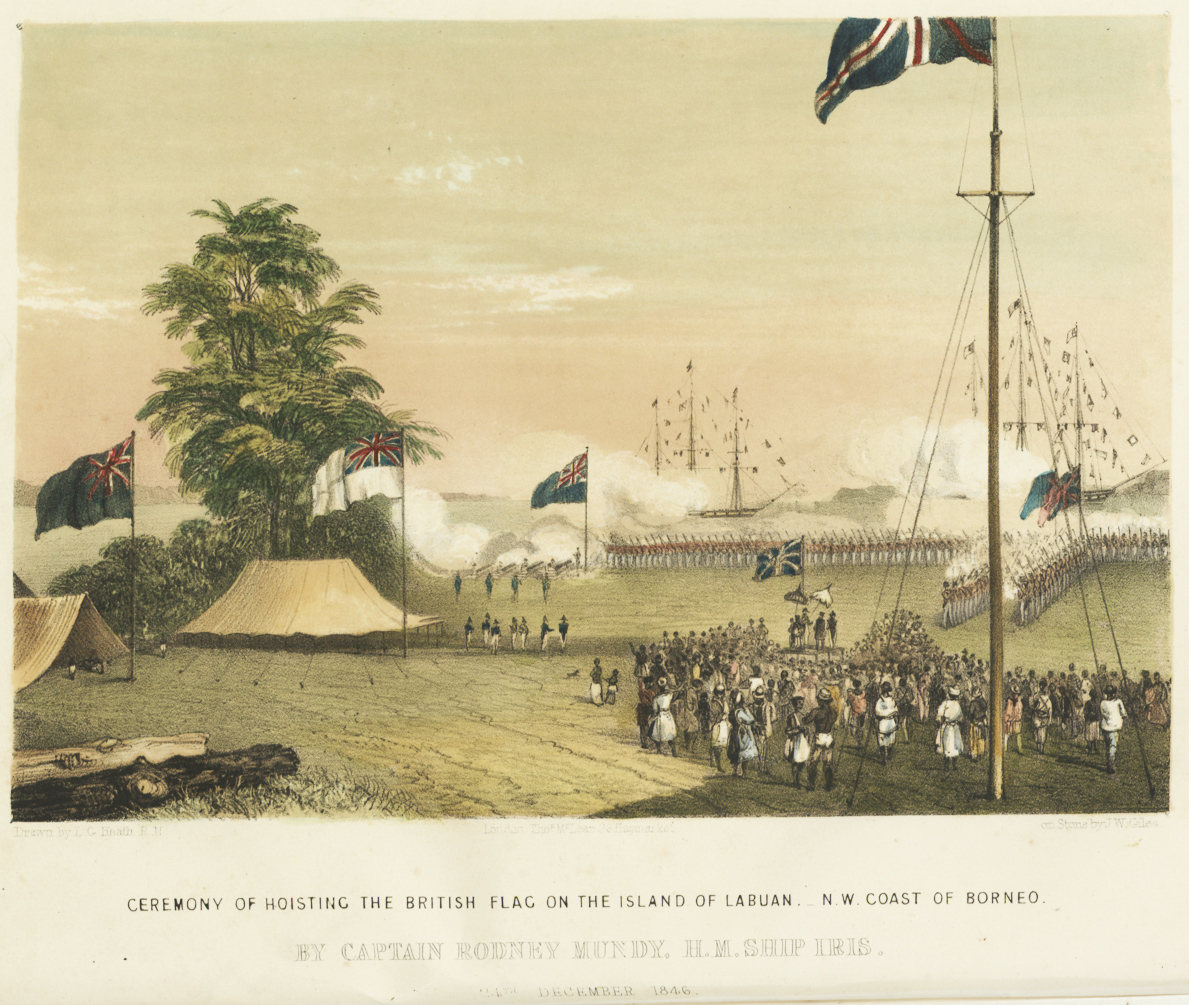
Labuan ceded to British under Treaty.
Brunei

Political
Global Trade
3 min read
Updated By: History Editorial Network (HEN)
Published:
In 1846, Brunei ceded Labuan to the British through the Treaty of Labuan. Labuan, strategically located in the maritime route of the region, attracted the interest of the British for its potential as a trading post and naval base. Under the treaty terms, Brunei allowed the British to establish a settlement on the island, paving the way for increased British influence in the region.
The cession of Labuan to the British had a significant impact on Brunei's political and economic landscape. It marked the beginning of British involvement in Brunei's affairs, leading to further concessions and treaties that gradually eroded Brunei's sovereignty. The presence of the British on Labuan also boosted economic activities in the region, transforming the island into a thriving trading hub.
Over time, Labuan emerged as an important center for trade and commerce, attracting a diverse population of traders, merchants, and immigrants. The British administration implemented laws and infrastructure that contributed to the development of Labuan as a key British outpost in Southeast Asia.
The Treaty of Labuan reflects a turning point in Brunei's history, highlighting the complexities of colonial expansion and its lasting impact on indigenous societies. It underscores the challenges faced by smaller nations in navigating power dynamics and territorial disputes in the face of imperial ambitions. #Brunei #Labuan #BritishColonialism #TreatyRelations
Primary Reference
Treaty of Labuan - Wikipedia

Explore the Life Moments of
 AI Twin