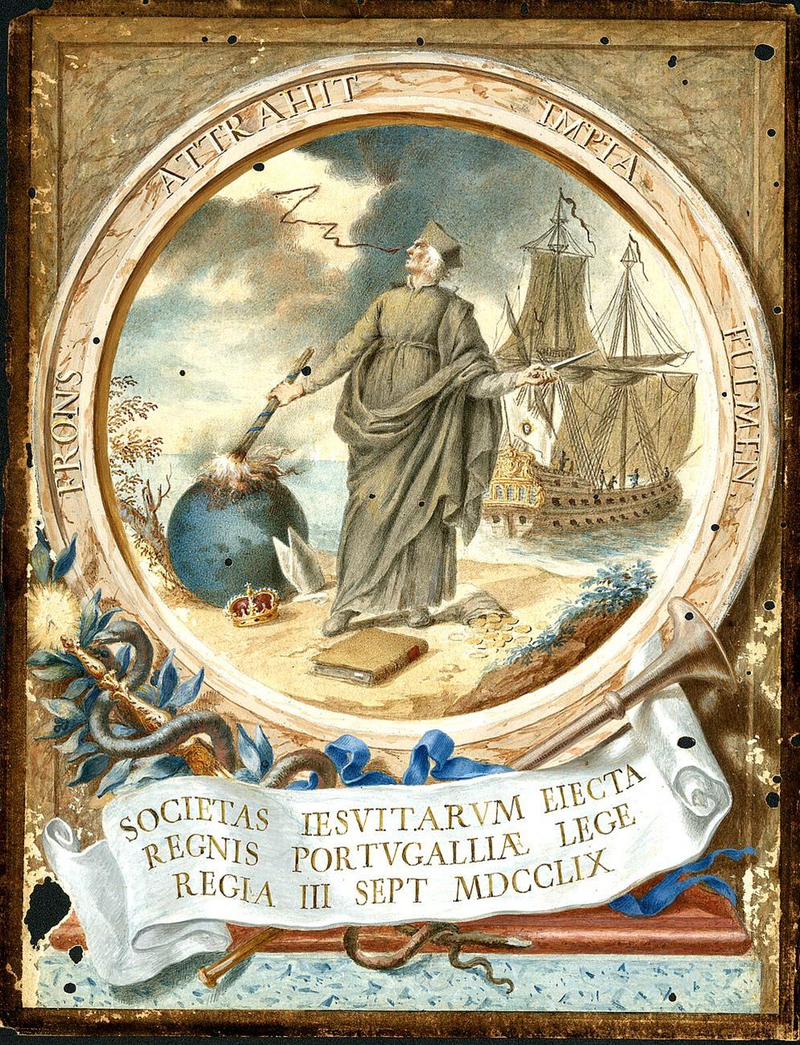
Expulsion of Jesuits by Marquis of Pombal
Decision and publication in Lisbon, and Portuguese overseas dominions, including Brazil, Portugal
Political
Religious
4 min read
Updated By: History Editorial Network (HEN)
Published:
Updated:
On September 3, 1759, precisely one year after an attempted assassination of King Joseph I, he issued the Portuguese law ordering the proscription, “denaturalization,” and expulsion of the Society of Jesus from Portugal and its dominions-an escalation orchestrated by the Marquis of Pombal that turned a political crackdown into a full imperial expulsion. Amidst growing tension between the Jesuits and the Portuguese Crown over territorial and economic control in Brazil, the Marquis of Pombal made the decision to expel the Jesuits from the region. The Jesuits, who had been a dominant force in education, religion, and politics in Brazil for over 200 years, were seen as a threat to the Crown's authority.
The Marquis of Pombal accused the Jesuits of various wrongdoings, including inciting indigenous uprisings and hoarding wealth. This led to a royal decree that expelled the Jesuits from Brazil and confiscated their properties.
The expulsion of the Jesuits had a significant impact on the religious and educational landscape of Brazil. Many indigenous communities who had been supported by the Jesuits were left vulnerable without their guidance and protection. Additionally, the educational institutions established by the Jesuits were either shut down or taken over by the state.
This event marked a turning point in the relationship between the Catholic Church and the Portuguese Crown in Brazil, leading to a decline in the influence of the Jesuits and the rise of secular power in the region. The repercussions of this expulsion were felt for years to come, shaping the future trajectory of Brazil's colonial history.
#JesuitsExpelled #MarquisofPombal #BrazilHistory
#Marquis-of-Pombal
Primary Reference
The Expulsion and Suppression in Portugal and Spain

Explore the Life Moments of
 AI Twin