Balaiada Uprising Starts in Maranhão
Brazil
Political
Social
3 min read
Updated By: History Editorial Network (HEN)
Published:
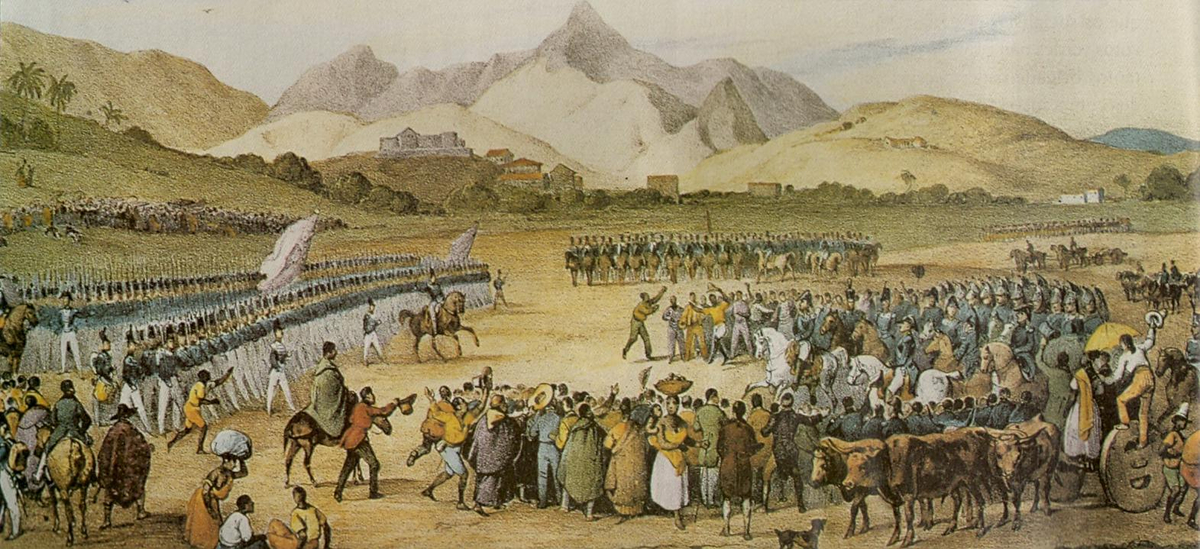
In Maranhão, Brazil, the Balaiada rebellion emerged as a significant protest against the ruling Brazilian Empire. The uprising was fueled by the discontent of the marginalized population, including peasants, Indigenous groups, and Afro-Brazilians, who were facing economic hardship and social inequality.
The movement was named after the balaios, the makeshift baskets that the rebels wore on their backs as a symbol of their struggle. The revolt quickly gained momentum, spreading to other regions in Brazil as people joined forces against the oppressive government and local elites. Despite lacking a centralized leadership, the rebels effectively utilized guerrilla tactics to challenge the imperial forces.
The Balaiada uprising had a profound impact on Brazilian society, exposing the deep-rooted grievances of the oppressed classes and highlighting the need for political and social reforms. The rebellion ultimately led to a significant shift in power dynamics and contributed to the broader struggle for justice and equality in Brazil.
Today, the Balaiada rebellion is remembered as a pivotal moment in Brazilian history, symbolizing the resilience and determination of the disenfranchised population to fight for their rights and freedom. #Balaiada #BrazilianEmpire #PopularUprising #Maranhão

Explore the Life Moments of
 AI Twin