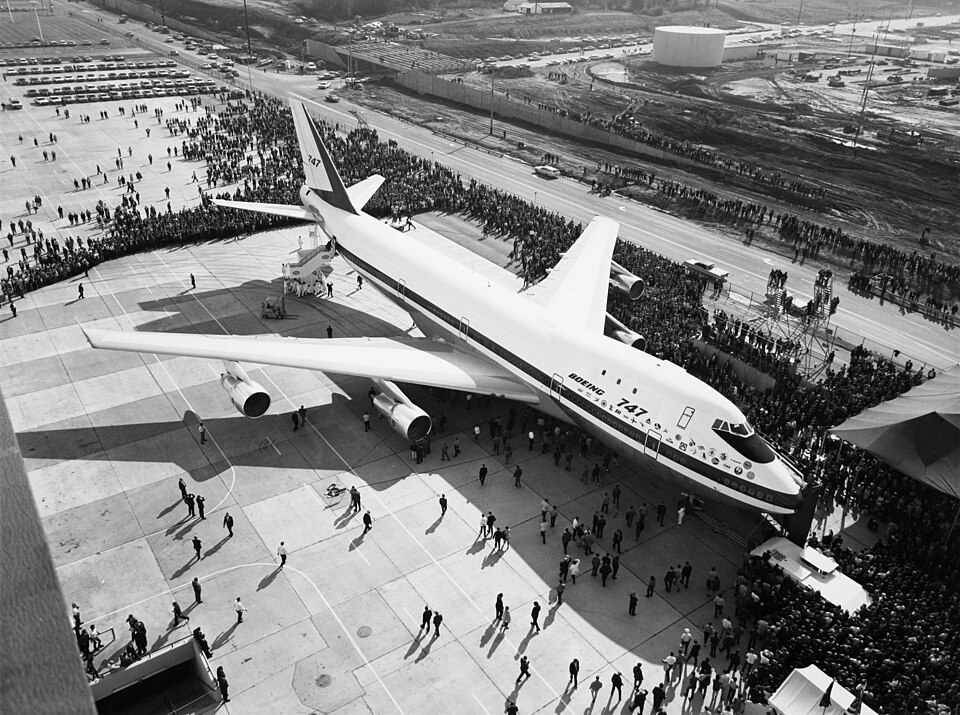
First Commercial Flight of Boeing 747
United States
Aviation
Transportation
3 min read
Updated By: History Editorial Network (HEN)
Published:
Updated:
The introduction of the Boeing 747 marked a pivotal moment in aviation history, as it was the first wide-body airliner to enter commercial service. This four-engine long-range aircraft was designed to accommodate a significantly larger number of passengers compared to its predecessors, fundamentally altering the dynamics of air travel. The Boeing 747 could carry more than 400 passengers, which allowed airlines to offer more affordable fares and increased accessibility to air travel for the general public. The aircraft's design included a distinctive hump on its upper deck, which not only contributed to its iconic appearance but also provided additional seating capacity.
The impact of the Boeing 747 on the airline industry was profound. It enabled airlines to operate more efficiently on long-haul routes, reducing the cost per seat and making international travel more feasible for a larger segment of the population. Over the years, more than 1,500 units of the Boeing 747 have been delivered, solidifying its status as a workhorse of the skies. The aircraft has been utilized for various purposes, including passenger transport, cargo, and even as a platform for specialized missions. The Boeing 747's legacy continues to influence modern aircraft design and airline operations, as it set new standards for capacity, range, and operational efficiency in commercial aviation.
#mooflife
#MomentOfLife
#Boeing747
#CommercialFlight
#AviationHistory
#AirlineIndustry
#PanAmericanAirways
Primary Reference
Boeing 747

Explore the Life Moments of
 AI Twin