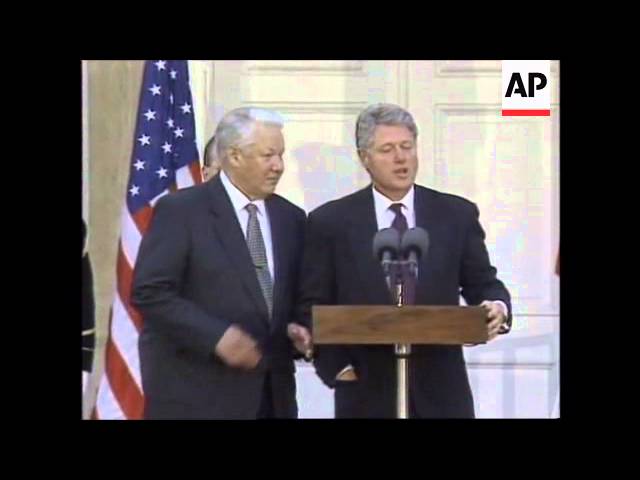
Summit to Reduce Nuclear Arms
United States of America
Political
Global Security
5 min read
Updated By: History Editorial Network (HEN)
Published:
At a pivotal point in history, U.S. President Bill Clinton and Russian President Boris Yeltsin met in Hyde Park, New York, with the aim of discussing the reduction of nuclear materials and arms. This meeting was a crucial step in the ongoing efforts to mitigate the global threat posed by nuclear arsenals accumulated during the Cold War.
The end of the Cold War marked a new era of cooperation between former adversaries, the United States and Russia. Central to maintaining global security was the control and reduction of nuclear weapons. By this time, both nations possessed the largest stockpiles of nuclear weapons, a legacy of decades-long arms competition. This massive accumulation posed substantial risks, including the potential for accidental launch, proliferation, and heightened tensions due to misunderstandings or miscalculated actions.
During their discussions, Clinton and Yeltsin focused on implementing the terms of existing treaties and exploring new measures to ensure the dismantling and safe handling of nuclear weapons and materials. Key treaties such as the Strategic Arms Reduction Treaty (START I), which had already initiated substantial cuts in strategic arsenals, were under examination. START II, which promised to further limit the number of nuclear warheads and delivery systems, was a critical topic. Additionally, the leaders scrutinized measures under the Nunn-Lugar Cooperative Threat Reduction Program, which provided U.S. funding to assist in the dismantlement and securement of former Soviet nuclear arsenals.
The collaboration sought to increase transparency and trust between the two nations. By sharing data, methods, and verification processes, they aimed to reduce the uncertainties that could lead to escalations. Statistics revealed that under START I, nuclear arsenals were set to be reduced by about 30% from previously agreed levels, a considerable step toward decreasing the global nuclear threat.
The impact of this meeting was more than symbolic; it was a reaffirmation of their nations' commitment to a safer world. By agreeing on practical measures for arms reduction and monitoring, Clinton and Yeltsin reinforced a collaborative stance against the proliferation of nuclear weapons. This move not only enhanced global security but also laid the groundwork for future disarmament efforts.
#MoofLife #NuclearReduction #USRussiaRelations #GlobalSecurity #ArmsControl
Primary Reference
Chronology of U.S.-Russia Summits, 1992 - 2000

Explore the Life Moments of
 AI Twin