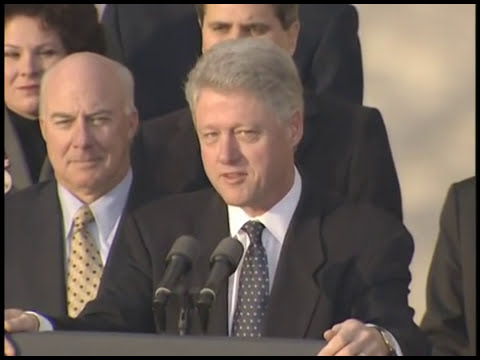
Statement on Bridging the Digital Divide
United States of America
Political
Technology
5 min read
Updated By: History Editorial Network (HEN)
Published:
In the early 2000s, President Bill Clinton issued a statement addressing the administration's efforts to bridge the digital divide. This focused initiative aimed to ensure that all citizens had equal access to digital technologies, which were increasingly necessary for economic advancement and personal development. The administration recognized that disparities in access to technology threatened to widen the gap between various socio-economic groups.
At that time, statistics revealed significant inequality in internet access. A report from the National Telecommunications and Information Administration highlighted that households with incomes over $75,000 were more than twenty times as likely to have internet access compared to those making less than $10,000. Additionally, urban areas were far better connected than rural areas, and disparities existed along racial and educational lines.
In response, the administration launched several initiatives. The E-rate program provided discounts to schools and libraries, making it more affordable for educational institutions to offer internet access and technology resources to students and the public. The Technology Opportunities Program (TOP) funded community-based projects to expand access to technology and the National Digital Library Program aimed to make cultural heritage materials accessible online, ensuring that knowledge and learning were within everyone's reach.
The administration's approach also included investment in infrastructure, focusing on rural and underserved urban areas. Public-private partnerships played a crucial role in these efforts, leveraging corporate investment and expertise.
The immediate impact of these initiatives was measured in terms of increased internet connectivity across various demographics and regions. More schools were equipped with computing resources, more libraries offered internet access, and community centers became hubs for digital learning. Long-term, these efforts laid the groundwork for a more digitally inclusive society, contributing to educational and economic opportunities for diverse populations.
#DigitalDivide #ClintonAdministration #TechnologyAccess #PublicPolicy #MoofLife

Explore the Life Moments of
 AI Twin