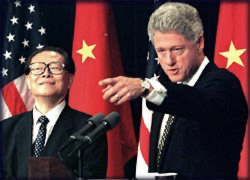
Conditions for Renewing Most Favored Nation Status with China Summarized
United States of America
Political
Global Trade
5 min read
Updated By: History Editorial Network (HEN)
Published:
In the early years of the 1990s, the United States was navigating its complex relationship with China. The issue of China's most favored nation (MFN) trade status was a critical point in this diplomatic landscape. At that juncture, President Bill Clinton issued Executive Order 12850, which specified conditions for renewing China's MFN status.
The executive order was in response to growing concerns about China's human rights record, trade practices, and overall transparency. It specified several criteria that China needed to meet to maintain its favorable trade position with the United States. These criteria included improvements in human rights conditions, fair trade practices, and increased transparency in various sectors.
Trade between the United States and China was significant, with billions of dollars in goods exchanged annually. Therefore, changes in trade status had substantial economic implications for both nations. U.S. businesses and investors monitored the situation closely, as China's MFN status directly influenced tariffs, market access, and the competitiveness of American goods in Chinese markets.
Human rights organizations also considered this a pivotal moment. They saw the executive order as leverage to push China toward implementing reforms. Reports from that period highlighted issues such as political repression, lack of freedom of expression, and poor labor conditions. The order aimed to pressurize the Chinese government to address these concerns, aligning economic incentives with ethical considerations.
Economists and trade analysts had diverse opinions on the likely impact of these conditions. Some believed that linking trade status to human rights and other reforms would foster positive changes. Others were skeptical, arguing that it might strain bilateral relations or provoke retaliatory measures from China.
The implications of Executive Order 12850 extended beyond trade. It influenced diplomatic strategies, economic policies, and international relations theory. It also set a precedent for how economic leverage could be utilized to encourage compliance with international norms and standards.
#MoofLife #BillClinton #ChinaTrade #HumanRights #EconomicPolicy #USChinaRelations #TradeStatus
Primary Reference
William J. Clinton Event Timeline | The American Presidency Project

Explore the Life Moments of
 AI Twin