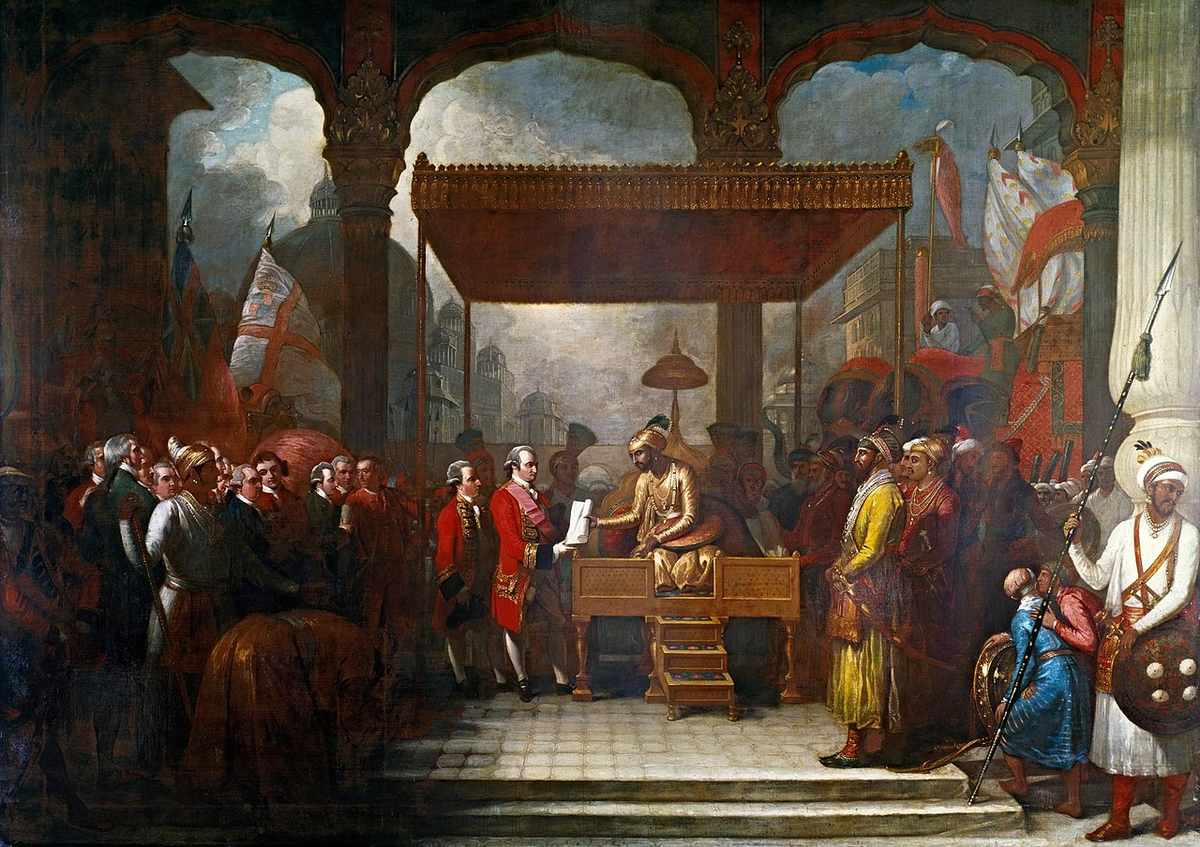
Treaty of Allahabad: Mughal Emperor Shah Alam II and British East India Company agreement.
Bangladesh

Historic Agreement
Power Shift
3 min read
Updated By: History Editorial Network (HEN)
Published:
The Treaty of Allahabad was a pivotal agreement between the Mughal Emperor Shah Alam II and the British East India Company. It marked a significant shift in power dynamics in the Indian subcontinent. The Treaty was a consequence of the Battle of Buxar, where the British East India Company emerged victorious over the combined forces of the Mughal Empire and the Nawabs of Bengal, Awadh, and Bihar.
Under the terms of the Treaty of Allahabad, Shah Alam II granted the Diwani rights of Bengal, Bihar, and Orissa to the British East India Company. This granting of revenue collection rights signified the beginning of direct British involvement in the governance of these regions. The treaty effectively established British control over a large part of present-day Bangladesh, providing the Company with substantial financial resources and authority.
The signing of the Treaty of Allahabad accelerated the decline of the Mughal Empire and significantly strengthened the position of the British East India Company in India. It laid the foundation for the Company's gradual dominance in Bengal and other parts of the subcontinent. The repercussions of this Treaty reverberated throughout the region, shaping the course of history for years to come.
#TreatyOfAllahabad #MughalEmpire #EastIndiaCompany #PowerShift #Bengal #HistoricAgreement #BritishColonialism

Explore the Life Moments of
 AI Twin