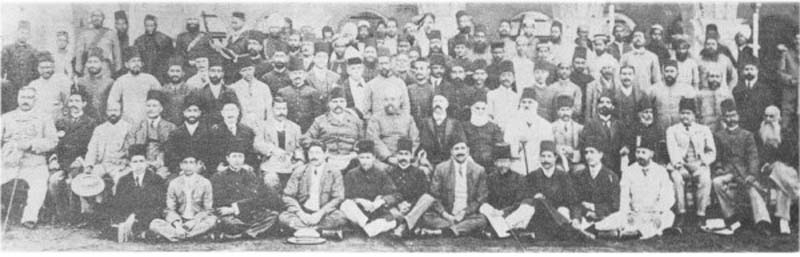
The formation of the All-India Muslim League
Bangladesh

Political
10 min read
Updated By: History Editorial Network (HEN)
Published:
The formation of the All-India Muslim League on December 30, 1906, in Dhaka (then part of British India, now in Bangladesh), was a pivotal event in the history of the Indian subcontinent. This political party played a crucial role in the struggle for the rights of Muslims in India and ultimately led to the creation of Pakistan in 1947. The establishment of the Muslim League marked the beginning of organized Muslim political representation in British India, setting the stage for the major political developments that followed.
Historical Context
Preceding Conditions
In the late 19th and early 20th centuries, the political landscape of British India was dominated by the Indian National Congress (INC), established in 1885. The INC primarily represented the interests of the Hindu majority and the emerging middle class, but it failed to adequately address the concerns of Muslims, who constituted a significant minority in India.
Growing Muslim Discontent
Muslims in India faced socio-economic disadvantages and feared that their cultural and religious identity would be overshadowed by the Hindu majority. This apprehension was particularly strong in regions where Muslims were in a minority. The decline of Muslim political power, following the 1857 revolt against the British, further exacerbated their sense of alienation.
Formation of the All-India Muslim League
Key Figures and Founding
The idea of a separate political organization for Muslims gained momentum under the leadership of prominent Muslim figures, including Nawab Khwaja Salimullah of Dhaka, Nawab Mohsin-ul-Mulk, and Aga Khan III. These leaders convened the All-India Muhammadan Educational Conference in Dhaka, where they decided to establish a political party to protect Muslim interests.
On December 30, 1906, the All-India Muslim League was officially formed. Nawab Salimullah presented a proposal, which was enthusiastically adopted, leading to the creation of the party. Aga Khan III was appointed its first president, symbolizing the unity of various Muslim leaders in this endeavor.
Objectives
The primary objectives of the All-India Muslim League were:
Promotion of Loyalty to the British Government: This included promoting loyalty among Indian Muslims to the British Crown, which they believed could safeguard their interests.
Protection of Muslim Rights: The League aimed to protect and advance the political rights and interests of Muslims in India.
Prevention of Hostility: It sought to prevent the rise of hostility among Muslims towards other communities, fostering an environment of mutual respect and understanding.
Political Activities and Impact
Initial Years
In its initial years, the Muslim League focused on advocating for separate electorates for Muslims. This was achieved with the Morley-Minto Reforms of 1909, which allowed for separate Muslim electorates in legislative councils. This ensured that Muslims could elect their own representatives, giving them a distinct political voice.
Shift Towards Self-Governance
During the 1920s and 1930s, under the leadership of figures like Muhammad Ali Jinnah, the Muslim League's focus shifted towards advocating for greater self-governance and political autonomy. The party began to distance itself from the INC, which it viewed as increasingly dominated by Hindu interests.
Lahore Resolution and Demand for Pakistan
The turning point came in 1940 with the Lahore Resolution, also known as the Pakistan Resolution, adopted at the League’s annual session in Lahore. The resolution called for "independent states" for Muslims in the northwestern and eastern zones of India. This marked the formal demand for a separate Muslim state, which would eventually be named Pakistan.
Legacy and Historical Significance
Role in Partition
The All-India Muslim League played a crucial role in the partition of India. Its persistent demand for a separate Muslim homeland led to the creation of Pakistan on August 14, 1947. The League's leadership, particularly under Muhammad Ali Jinnah, was instrumental in negotiating the terms of partition with the British and the INC.
Continued Influence
After the creation of Pakistan, the Muslim League became the dominant political party in the new country. It shaped Pakistan’s early political landscape and laid the foundation for its governance structures. The League's emphasis on Islamic identity and political unity continued to influence Pakistan’s national ethos.
Reflection on Communal Politics
The formation and activities of the All-India Muslim League also highlight the complexities of communal politics in colonial India. The party's emergence was a response to the perceived marginalization of Muslims and reflects the broader challenges of managing religious and cultural diversity in a colonial context.
Conclusion
The formation of the All-India Muslim League was a defining moment in the political history of the Indian subcontinent. It provided a platform for Muslim political representation and u
Primary Reference
All-India Muslim League - Wikipedia

Explore the Life Moments of
 AI Twin