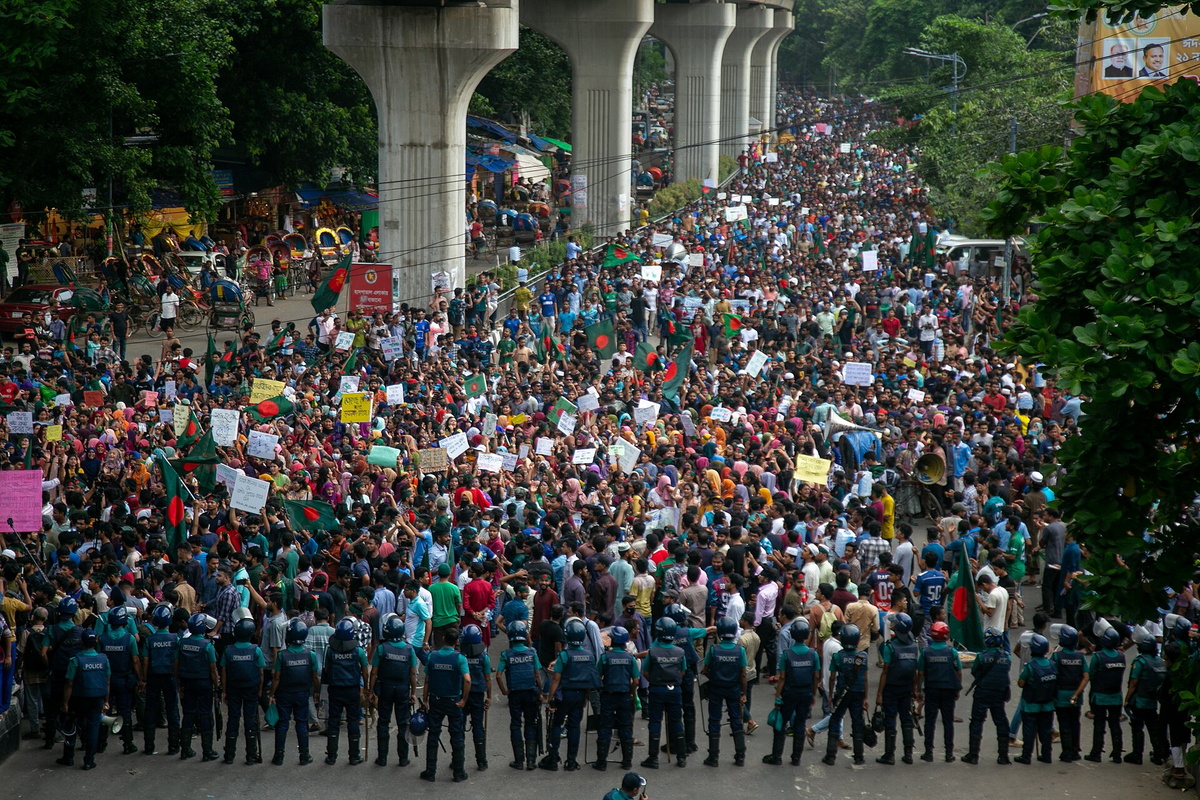
Bangladesh quota reform protests turn tragic with 75 deaths, prompting government to impose curfew.
Bangladesh
Political
Social Unrest
5 min read
Updated By: History Editorial Network (HEN)
Published:
Updated:
The Bangladesh quota reform movement experienced a catastrophic event when 75 people lost their lives amid protests. This movement, advocating for changes to the country's government job quota system, had been gaining momentum for several months. Demonstrators were calling for a reduction in the quotas reserved for certain groups, arguing that the existing system was unfair and hindered merit-based employment opportunities for deserving candidates.
During a particularly intense demonstration, clashes erupted between protesters and law enforcement. This confrontation turned violent, resulting in significant casualties. Eyewitnesses reported chaos as police used force to disperse the crowds, including tear gas and rubber bullets. In response, some protesters retaliated, leading to widespread confusion and a tragic number of fatalities.
The government, in an attempt to regain control and prevent further violence, imposed a city-wide curfew. This decision aimed to curb the unrest and restore order, though it also restricted the movement of ordinary civilians and disrupted daily life. The imposition of the curfew highlighted the severity of the situation and the government's response to the escalating crisis.
The immediate impact of the deaths was profound. Families mourned the loss of their loved ones, and public sentiment grew increasingly volatile. Human rights organizations condemned the violence, calling for investigations into the excessive use of force by the police. International observers expressed concern over the handling of the protests and the broader implications for civil liberties in Bangladesh.
Statistics from various sources indicated that the casualty toll of this particular incident was one of the highest in the history of the nation's protest movements. This tragic event forced a critical examination of the quota system and raised questions about the balance between state authority and citizens' rights to protest.
In the aftermath, dialogues began between government officials and representatives of the quota reform movement. The goal was to address the underlying issues and find a peaceful resolution to the grievances that had fueled the protests.
#MoofLife #Bangladesh #QuotaReform #Protests #HumanRights #Government #CivilLiberties #Curfew #PublicSentiment #InternationalResponse
Primary Reference
What happened at the quota-reform protests in Bangladesh?

Explore the Life Moments of
 AI Twin