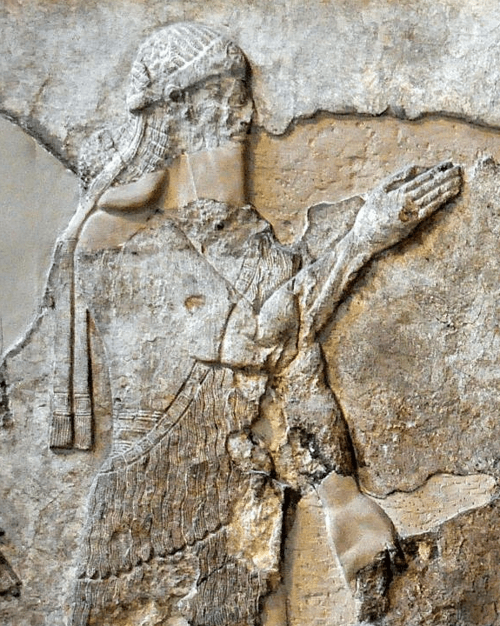
Shalmaneser V declared king of Babylon
Iraq
Ancient History
Middle Eastern Studies
Archaeology
4 min read
Updated By: Akila Ranathunga
Published:
Updated:
Shalmaneser V, an Assyrian king, was declared king of Babylon during a period marked by significant political and cultural shifts in the region. His ascension to the throne represented a continuation of Assyrian dominance over Babylon, which had been a contested territory for centuries. The Assyrian Empire, known for its military prowess and administrative efficiency, sought to integrate Babylon into its realm, thereby consolidating power and influence. This move was part of a broader strategy to unify the diverse populations under Assyrian rule, which included the promotion of the Assyrian language and culture as a lingua franca across the empire. The gradual replacement of Akkadian with Mesopotamian Aramaic as the spoken language among the general populace reflected these changes, as the Assyrians aimed to foster a cohesive identity among their subjects.
The impact of Shalmaneser V's reign was felt not only in military campaigns but also in the cultural landscape of the region. His rule coincided with a time when the Assyrian Empire was expanding its territories, and the integration of Babylon was crucial for maintaining control over the southern regions. However, Shalmaneser V's reign was cut short when he died during a military campaign against Samaria, which underscored the challenges faced by Assyrian rulers in maintaining their expansive empire. The political instability that followed his death contributed to a power vacuum in Babylon, leading to further conflicts and shifts in control. The legacy of Shalmaneser V's declaration as king of Babylon is thus intertwined with the broader narrative of Assyrian imperial ambitions and the complex dynamics of Mesopotamian politics during this era.
#mooflife
#MomentOfLife
#ShalmaneserV
#Babylon
#AssyrianEmpire
#MesopotamianHistory
#AramaicLanguage

Explore the Life Moments of
 AI Twin