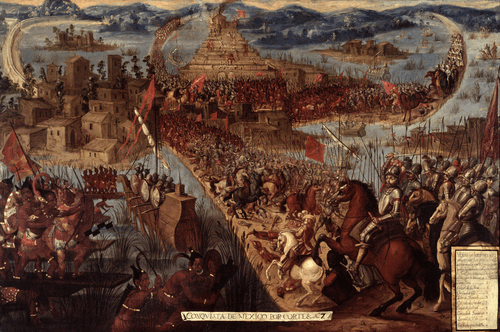
Fall of Tenochtitlan and Emperor's Capture
Mexico
Mesoamerica
Aztec Empire
4 min read
Updated By: History Editorial Network (HEN)
Published:
Updated:
The fall of Tenochtitlan was a pivotal event in the history of Mexico, marking the end of the Aztec Empire and the beginning of Spanish dominance in the region. The siege, led by Spanish conquistador Hernán Cortés, involved a coalition of Spanish forces and indigenous allies, notably the Tlaxcalans. The prolonged conflict was characterized by fierce resistance from the Mexica, led by their last emperor, Cuauhtémoc. Despite their efforts to defend the city, the Aztecs faced overwhelming odds, including superior weaponry and tactics employed by the Spanish forces. The siege culminated in the capture of Tenochtitlan, which had been a thriving urban center and the heart of the Aztec civilization. The fall of the city not only resulted in significant loss of life but also led to the dismantling of the Aztec political and social structures, paving the way for Spanish colonization.
Following the capture of Tenochtitlan, Cuauhtémoc was taken prisoner. His capture symbolized the complete subjugation of the Aztec Empire. The Spaniards held him captive, and under the orders of Cortés, he was subjected to torture and ultimately executed. This act was part of a broader strategy to instill fear among the indigenous populations and consolidate Spanish control over the newly acquired territories. The fall of Tenochtitlan and the fate of Cuauhtémoc had lasting implications, as they marked the transition of power in central Mexico and initiated a period of significant cultural and demographic changes due to colonization. The event is often viewed as a turning point that reshaped the history of the Americas, leading to the establishment of Spanish colonial rule and the profound transformation of indigenous societies.
#mooflife
#MomentOfLife
#Tenochtitlan
#Cuauhtémoc
#SpanishConquest
#AztecEmpire
#HernánCortés

Explore the Life Moments of
 AI Twin