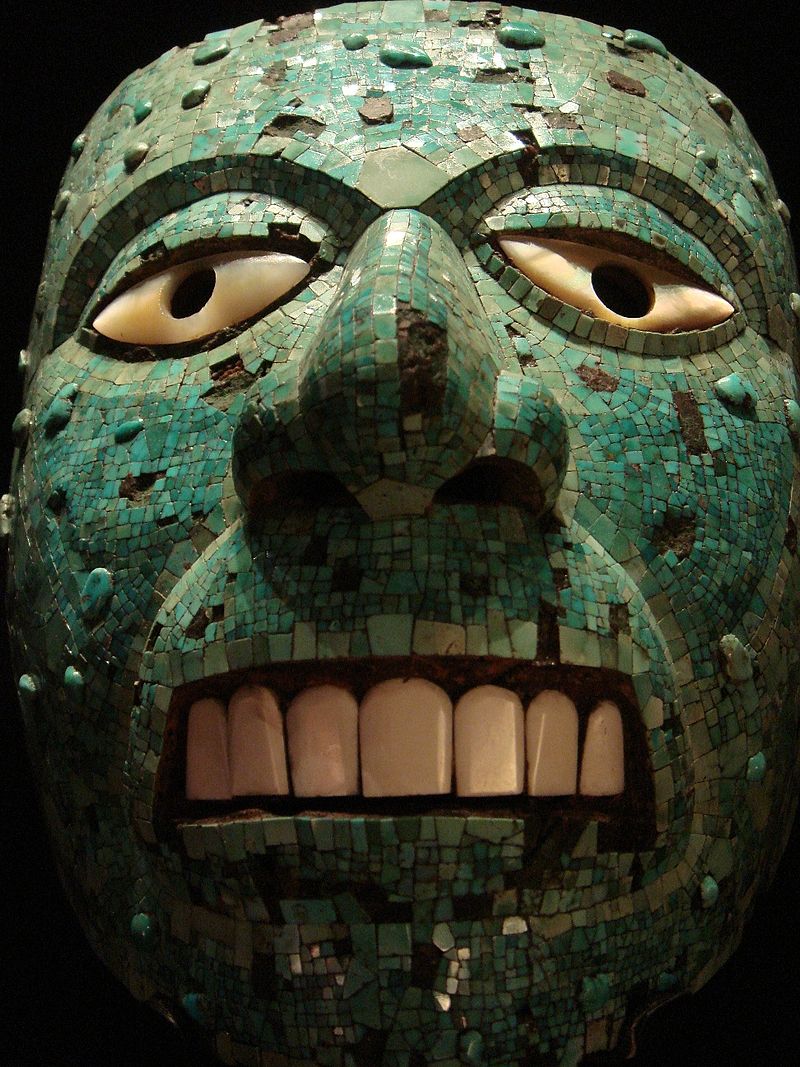
Creation of the Mask of Xiuhtecuhtli
Valley of Mexico, Aztec Empire, Mexico
Cultural Artifacts
Mesoamerican History
Museum Collections
8 min read
Updated By: History Editorial Network (HEN)
Published:
Updated:
The Mask of Xiuhtecuhtli, an elaborate turquoise mosaic artifact created between approximately 1400 and 1521 CE, represents one of the finest surviving examples of Aztec luxury craftsmanship from the Late Postclassic period of Mesoamerican history. Associated with Xiuhtecuhtli, the Mexica deity linked to fire, heat, and rulership, the ceremonial mask reflects the artistic sophistication and symbolic traditions of the Aztec Empire during the centuries immediately preceding the Spanish conquest. Today, the object is preserved in the British Museum in London, where it remains one of the institution’s most recognized Mesoamerican artifacts.
The mask was constructed using a wooden base covered with small pieces of turquoise mosaic carefully attached with adhesive materials. Additional decorative elements include shell, obsidian, and conch details that create striking facial features and geometric designs. The vivid blue-green turquoise was especially valuable in Mesoamerican societies and often associated with sacred power, fire symbolism, elite status, and divine authority. Because turquoise was not naturally abundant in central Mexico, much of the material likely reached the Aztec world through long-distance trade networks extending into northern Mexico and the American Southwest.
Xiuhtecuhtli, whose name can be translated roughly as “Turquoise Lord” or “Lord of Fire,” occupied an important role in Mexica religion. He was connected to fire, time, renewal, rulership, and cosmic cycles, and was often represented with turquoise adornments in codices and ritual imagery. The use of turquoise mosaic on the mask directly reflected these symbolic associations. Scholars believe objects of this kind may have been worn during ceremonies, displayed as sacred regalia, or used in religious rituals connected to elite or priestly activities.
Aztec mosaic craftsmanship developed through a long Mesoamerican artistic tradition inherited in part from earlier civilizations such as the Mixtecs and Toltecs. Mosaic artisans known for their specialized work produced ceremonial shields, knives, skulls, masks, and ritual ornaments using precisely cut stones and shells arranged into intricate patterns. These luxury objects circulated among rulers, priests, and noble families and were often connected to diplomacy, tribute, or temple rituals within the empire.
The exact original context of the Mask of Xiuhtecuhtli remains uncertain because many ceremonial objects were removed from Mesoamerica during or after the Spanish conquest. Like numerous surviving Aztec artifacts now housed in European collections, the mask reached Europe through colonial networks established during the 16th century. It eventually became part of the British Museum’s collection, where it is now displayed as a major example of pre-Columbian art and craftsmanship.
Art historians and archaeologists regard the mask as significant not only for its artistic quality but also for the insight it provides into Mexica religious symbolism and elite ceremonial culture. The careful assembly of thousands of mosaic fragments demonstrates the advanced technical skill of Aztec artisans and the importance of precious materials within imperial visual culture.
Historical Significance
The Mask of Xiuhtecuhtli preserves evidence of the highly developed artistic and ceremonial traditions of the Aztec Empire during its final centuries before European conquest. Its survival offers modern audiences a rare example of the luxury objects that once formed part of Mexica religious and political life, while also illustrating the extensive trade networks and specialized craftsmanship of Late Postclassic Mesoamerica.
Moctezuma Aztec Ruler exhibition.
#mooflife
#MomentOfLife
#Aztec
#Xiuhtecuhtli
#Mask
#MesoamericanArtifacts
#BritishMuseum
Primary Reference
mask; mosaic

Explore the Life Moments of
 AI Twin