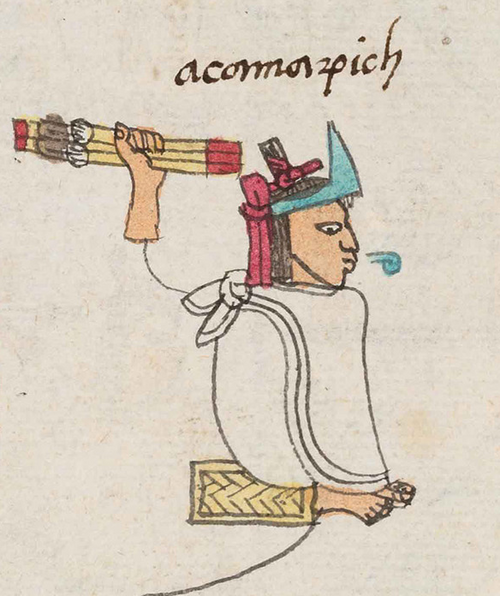
Acamapichtli becomes first tlatoani (king) of the Mexica
Tenochtitlán, Valley of Mexico, Mexico
AztecEmpire
AztecHistory
7 min read
Updated By: History Editorial Network (HEN)
Published:
Updated:
In 1375, the Mexica people of Tenochtitlán selected Acamapichtli as their first tlatoani, establishing a dynastic form of rulership that transformed the political structure of the growing city-state. This event marked the transition of the Mexica from a relatively recent migrant community governed through clan and council leadership into a more centralized monarchy. The office of tlatoani, often translated as “Great Speaker,” became the highest political and military authority in Mexica society and later served as the foundation of imperial rule across much of Mesoamerica.
Before the rise of Acamapichtli, the Mexica remained one of several Nahua-speaking groups living in the Valley of Mexico after migrating into the region during the Late Postclassic period. Since founding Tenochtitlán in 1325 on an island in Lake Texcoco, the Mexica had grown steadily but remained politically subordinate to stronger regional powers, particularly the Tepanec state centered at Azcapotzalco. Their society was organized around kinship groups known as calpulli, with leadership shared among elders and military figures rather than concentrated in a hereditary royal office.
According to later historical chronicles, Mexica leaders sought a ruler with noble lineage connected to respected dynasties in the Valley of Mexico. Acamapichtli was chosen partly because of his ties to the prestigious Culhua lineage, which traced its ancestry to the Toltecs, whose civilization carried great symbolic authority throughout central Mexico. Through these dynastic connections, the Mexica strengthened their political legitimacy among neighboring city-states.
Acamapichtli’s reign, traditionally dated from 1375 to 1395, focused on consolidating political authority, expanding alliances, and organizing the social structure of Tenochtitlán. Historical sources indicate that he arranged strategic marriages with noble families from surrounding altepetl, helping integrate different groups within the growing Mexica state. During this period, the city also expanded its agricultural systems, including the continued development of chinampas, which increased food production and supported population growth.
The establishment of the tlatoani system created a more formalized government that combined military leadership, religious authority, and dynastic succession. The ruler served not only as a political leader but also as a ceremonial figure closely tied to Mexica religious life and warfare. Later rulers such as Itzcoatl, Moctezuma I, and Ahuitzotl would build upon this structure as Tenochtitlán expanded into the dominant power of the Aztec Empire during the 15th century.
Although Acamapichtli governed a city-state that was still relatively modest in power compared to later imperial Tenochtitlán, his reign established institutions that endured until the Spanish conquest in 1521. The royal dynasty founded under his leadership continued through successive tlatoque, or rulers, who directed the military expansion and administrative organization of the Mexica state across central Mexico.
Historical Significance
The election of Acamapichtli formalized political leadership in Tenochtitlán and provided the Mexica with dynastic legitimacy within the competitive political environment of the Valley of Mexico. The creation of the tlatoani office established the governing framework that later supported the expansion of the Aztec Empire.
#Acamapichtli
#Tlatoani
#AztecEmpire
#Mexica
#AztecHistory
Primary Reference
Aztec Civilization

Explore the Life Moments of
 AI Twin