Victory in 2012 Burmese by-elections
Myanmar
Politics
Elections
Burmese
9 min read
Updated By: History Editorial Network (HEN)
Published:
Updated:
On 01/04/2012, Myanmar held parliamentary by-elections in which the opposition National League for Democracy (NLD), led by Aung San Suu Kyi, won a decisive victory. The vote filled 45 vacant seats in the national and regional legislatures and marked the first time the NLD had participated in an election since the party boycotted the 2010 general election. The results allowed the party to enter parliament during a period of political reform initiated by the government of President Thein Sein.
The NLD contested 44 of the 45 available seats and won 43 of them. Of these, 37 seats were in the Pyithu Hluttaw, the lower house of Myanmar’s national parliament, while 4 seats were in the Amyotha Hluttaw, the upper house. The party also secured 2 seats in state and regional assemblies. One seat was won by a candidate from the ruling Union Solidarity and Development Party (USDP). The strong results reflected broad public support for the NLD across the constituencies where the party fielded candidates.
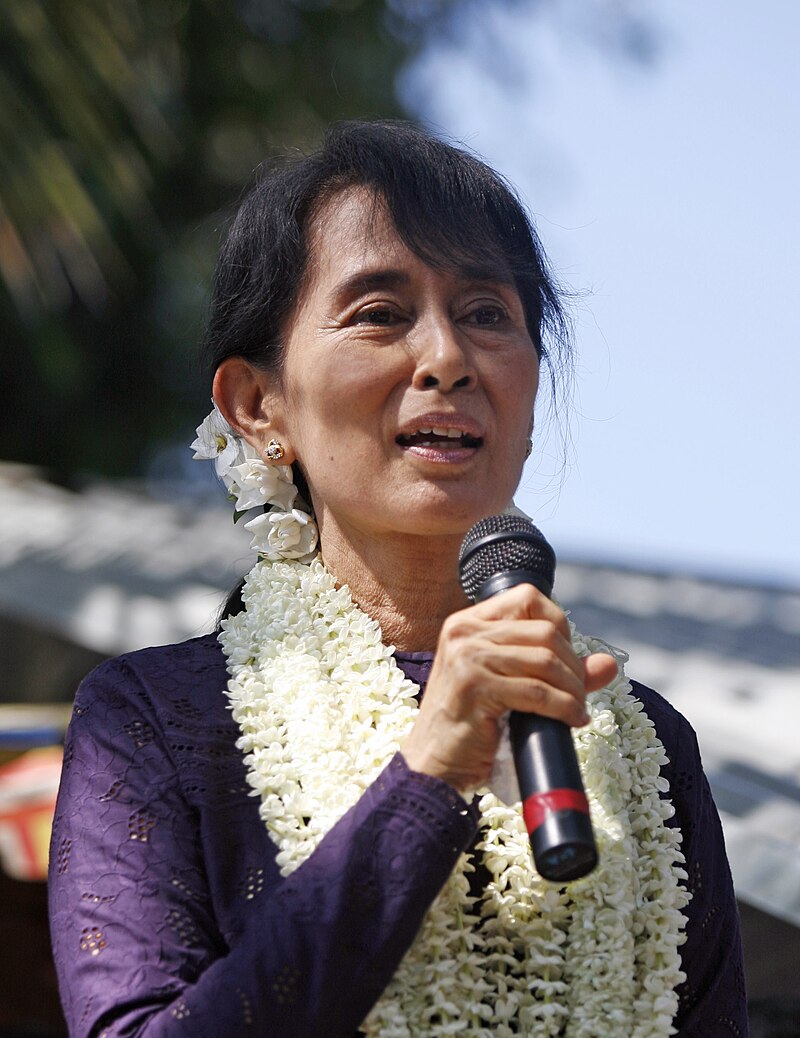
Aung San Suu Kyi herself was elected to the Pyithu Hluttaw representing the Kawhmu constituency, located south of Yangon. The victory marked the first time she held an elected public office after years of political detention and restrictions under previous military governments. Suu Kyi had spent approximately 15 years under house arrest between 1989 and 2010 due to her leadership in the pro-democracy movement.
The by-elections were widely viewed as part of Myanmar’s political opening following decades of military rule. International observers and foreign governments monitored the vote closely, and many described the process as more open than previous elections. After the results were confirmed, several Western governments began reviewing economic and diplomatic sanctions that had been imposed on Myanmar during earlier periods of military governance.
Despite the scale of the NLD’s victory, the party gained only a small share of the total seats in parliament. The legislature remained dominated by the military-backed Union Solidarity and Development Party and by military representatives. Under Myanmar’s 2008 constitution, the armed forces were guaranteed 25 percent of parliamentary seats, while the USDP held most of the remaining seats from the 2010 general election. As a result, the NLD’s parliamentary presence after the by-election represented approximately 6 percent of the total legislature.
The 2012 by-election nonetheless marked a significant political development in Myanmar, as it brought opposition figures into the national parliament and allowed Aung San Suu Kyi to formally participate in the country’s legislative process.
● The 2012 Burmese by-elections marked a pivotal moment in Myanmar's political landscape, showcasing a significant shift towards democratic governance. The National League for Democracy (NLD), led by Aung San Suu Kyi, participated in these elections, which were held to fill 45 vacant seats in the Pyithu Hluttaw, the House of Representatives. The NLD achieved a remarkable victory, winning 43 of the 45 contested seats. This success not only solidified the party's position in the political arena but also symbolized a broader acceptance of democratic processes in a country that had long been under military rule. Aung San Suu Kyi's election to the Pyithu Hluttaw was particularly noteworthy, as it marked her formal entry into the political system after years of house arrest and political struggle against the military junta.
The impact of the by-elections extended beyond the immediate electoral results. The NLD's success was seen as a validation of the political reforms initiated by the government, which had begun to open up the political space in Myanmar. This shift was crucial in fostering a more participatory political environment, encouraging greater public engagement in governance. The by-elections also attracted international attention, with many countries expressing support for Myanmar's transition towards democracy. The results were viewed as a potential catalyst for further reforms, leading to increased dialogue between the government and opposition parties. Overall, the 2012 by-elections represented a significant step towards democratic governance in Myanmar, with lasting implications for the country's political future.
#mooflife
#MomentOfLife
#BurmeseBy-elections
#AungSanSuuKyi
#NationalLeagueForDemocracy
#MyanmarPolitics
#DemocraticGovernance
Primary Reference
2012 Myanmar by-elections

Explore the Life Moments of
 AI Twin