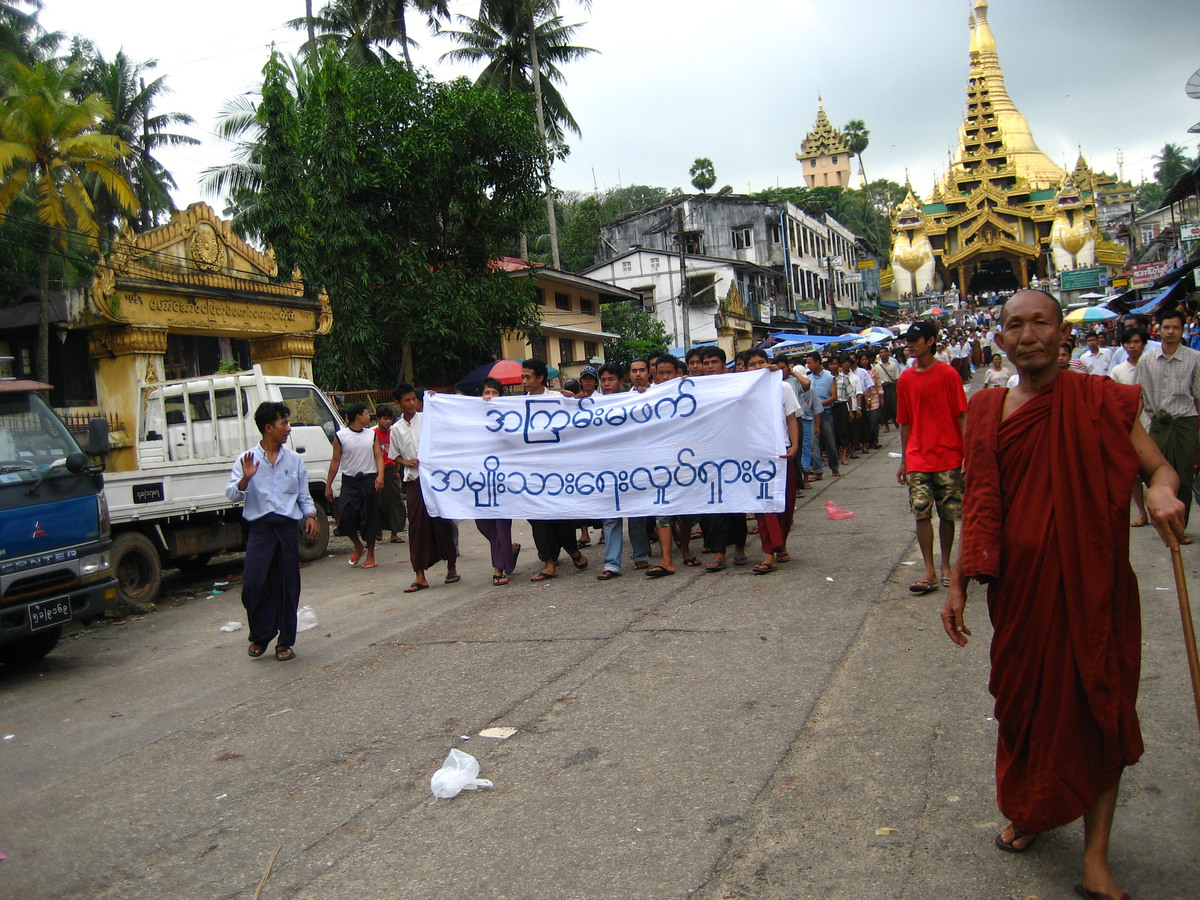
Protests led by Buddhist monks
Myanmar
Social Movements
Religious Activism
Political Protests
4 min read
Updated By: History Editorial Network (HEN)
Published:
Updated:
The protests led by Buddhist monks, known as the Saffron Revolution, emerged in response to significant fuel price increases that affected the daily lives of citizens. The movement began with monks taking to the streets, advocating for political reform and human rights in Myanmar. The monks, who hold a revered position in Burmese society, played a crucial role in mobilizing public sentiment against the military regime. Their involvement marked a pivotal shift in the protests, as they called for an end to the oppressive government practices and demanded greater democracy. The protests gained momentum, drawing thousands of supporters from various sectors of society, including students and ordinary citizens, who joined the monks in their calls for change. Despite the military's threats of violence and repression, the protests continued daily, highlighting the determination of the participants to seek justice and reform. The monks' peaceful demonstrations were characterized by their traditional saffron robes, which became a symbol of the movement and drew international attention to the plight of the Burmese people under military rule. The protests not only raised awareness of the political situation in Myanmar but also inspired solidarity movements globally, emphasizing the importance of nonviolent resistance in the face of oppression. The Saffron Revolution ultimately underscored the potential for religious leaders to influence political change and the power of collective action in challenging authoritarian regimes.
#mooflife
#MomentOfLife
#BuddhistMonks
#SaffronRevolution
#MyanmarProtests
#PoliticalReform
#NonviolentResistance
Primary Reference
Saffron Revolution

Explore the Life Moments of
 AI Twin