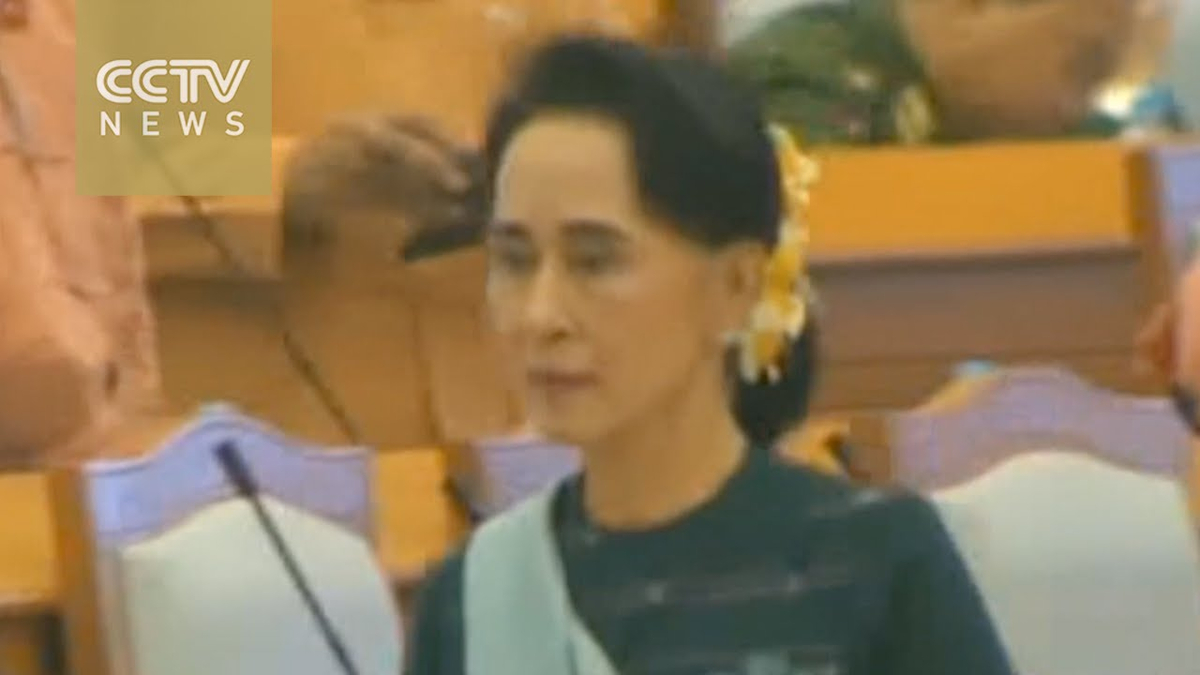
Aung San Suu Kyi's role as State Counsellor established
Naypyidaw, Myanmar
Government
Politics
Legislation
10 min read
Updated By: History Editorial Network (HEN)
Published:
Updated:
On 06/04/2016, Myanmar’s parliament approved the creation of the position of State Counsellor, allowing Aung San Suu Kyi to assume a leading role in the country’s civilian government following the National League for Democracy’s (NLD) electoral victory in the 2015 general election. The role was established through legislation passed by both chambers of parliament, the House of Representatives and the House of Nationalities, and was designed to enable Suu Kyi to coordinate government activities across ministries and guide national policy.
The creation of the position followed constitutional restrictions that prevented Suu Kyi from becoming president. Myanmar’s 2008 constitution bars individuals from the presidency if their spouse or children hold foreign citizenship. Suu Kyi’s late husband, British academic Michael Aris, was a United Kingdom citizen, and their two sons also hold British nationality. Because of this provision, the NLD nominated Htin Kyaw as president after its landslide victory in the November 2015 election. The new State Counsellor role allowed Suu Kyi to effectively lead the civilian administration while formally holding several ministerial posts, including the position of foreign affairs minister.
The legislation establishing the office of State Counsellor granted Suu Kyi authority to coordinate between the executive branch, parliament, and government ministries. In practice, the role functioned similarly to that of a prime minister, enabling her to direct policy initiatives and oversee the implementation of government programs. The move represented an institutional adjustment within Myanmar’s political system as the country continued its transition from decades of direct military rule toward a civilian-led government.
During her tenure as State Counsellor, Suu Kyi’s administration pursued economic development initiatives and sought to expand foreign investment and infrastructure projects. The government also focused on reforms in sectors such as education, healthcare, and public administration. However, her leadership period also coincided with escalating international scrutiny over the treatment of the Rohingya minority in Rakhine State, particularly following military operations in 2017 that led to a large displacement of Rohingya civilians into neighboring Bangladesh.
The establishment of the State Counsellor position reflected the political dynamics of Myanmar’s transition period. While a civilian government led by the NLD held parliamentary authority, the military retained significant constitutional powers, including control of key ministries and a guaranteed share of parliamentary seats. Suu Kyi’s role as State Counsellor remained central to Myanmar’s government until the military coup on 01/02/2021, when the armed forces detained her and other senior officials and declared a state of emergency.
● Aung San Suu Kyi's appointment as State Counsellor marked a pivotal moment in Myanmar's political landscape. The position was created specifically for her, functioning similarly to that of a Prime Minister. This development followed her party's electoral victory, which allowed her to assume a leadership role despite constitutional restrictions that prevented her from becoming President due to her late husband's foreign nationality. The establishment of the State Counsellor role was approved by both the House of Nationalities and the House of Representatives, reflecting a significant shift in governance and the consolidation of power within her party. This role enabled her to exert considerable influence over the country's administration and policy-making processes, effectively allowing her to lead the government while navigating the complexities of Myanmar's political environment, which included military influence and ethnic tensions.
The impact of her leadership as State Counsellor was profound, as it represented a transition towards a more democratic governance structure after decades of military rule. Under her guidance, the government aimed to implement reforms in various sectors, including education, health, and economic development. However, her tenure was also marked by challenges, particularly regarding the Rohingya crisis, which drew international criticism and raised questions about her commitment to human rights. The duality of her leadership-promoting democratic ideals while facing accusations of human rights violations—has led to a complex legacy. The establishment of the State Counsellor position not only symbolized a new era for Myanmar but also highlighted the ongoing struggles within the country as it sought to balance progress with the realities of its historical and political context.
#mooflife
#MomentOfLife
#AungSanSuuKyi
#StateCounsellor
#MyanmarPolitics
#Democracy
#RohingyaCrisis
Primary Reference
New government role created for Myanmar’s Aung San Suu Kyi

Explore the Life Moments of
 AI Twin