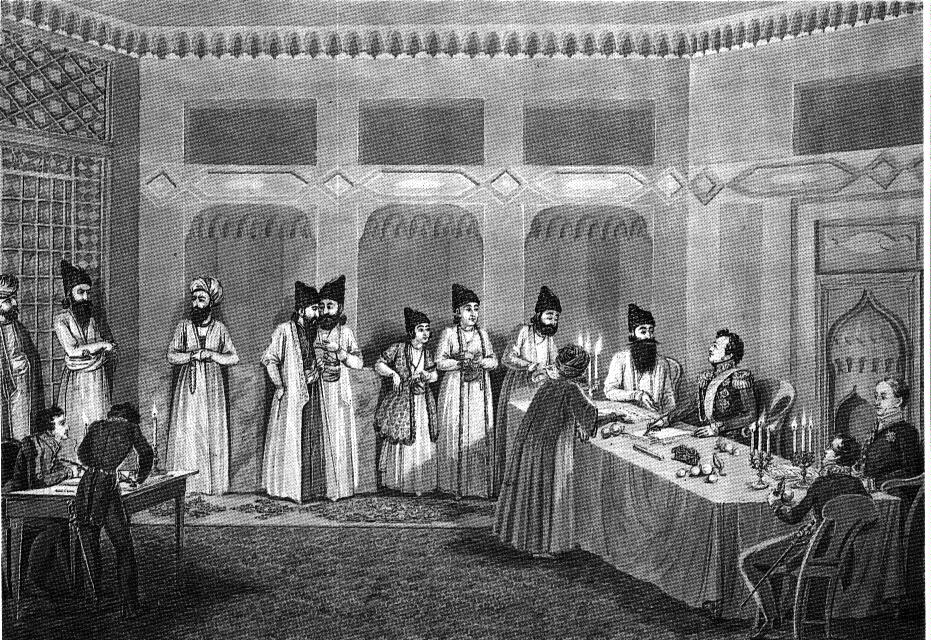
Russian Empire secured control over Yerevan and Nakhchivan through Treaty of Turkmenchay.
Armenia
Political
3 min read
Updated By: History Editorial Network (HEN)
Published:
Following a series of military conflicts between the Russian Empire and Persia, the Treaty of Turkmenchay was concluded, resulting in the cession of the territories of Yerevan and Nakhchivan from Persia to Russia. This agreement solidified Russian control over these regions, marking a significant shift in power dynamics in the Caucasus.
The background of the treaty can be traced back to the Russo-Persian War of 1826-1828, where Russia's military superiority forced Persia to seek a peace settlement. As a result, Persia was compelled to cede these territories and recognize Russian influence in the region. This event not only altered the geopolitical landscape of the Caucasus but also had lasting implications for the people living in these areas.
The signing of the Treaty of Turkmenchay had a profound impact on the Armenian population residing in Yerevan and Nakhchivan, as they found themselves under Russian rule. The treaty also further entrenched Russian expansion into the Caucasus region, setting the stage for future developments in the area.
The Treaty of Turkmenchay underscored the growing influence of the Russian Empire in the Caucasus, solidifying its control over key territories and reshaping the political dynamics of the region. It remains a pivotal moment in Armenian history, highlighting the complex interactions between regional powers and their lasting consequences. #TreatyofTurkmenchay #RussianEmpire #CaucasusHistory #Armenia
Primary Reference
Changing Geopolitics of the South Caucasus after the Second ...

Explore the Life Moments of
 AI Twin