1976 Argentine coup d'état
Argentina
10 min read
Updated By: History Editorial Network (HEN)
Published:
Updated:
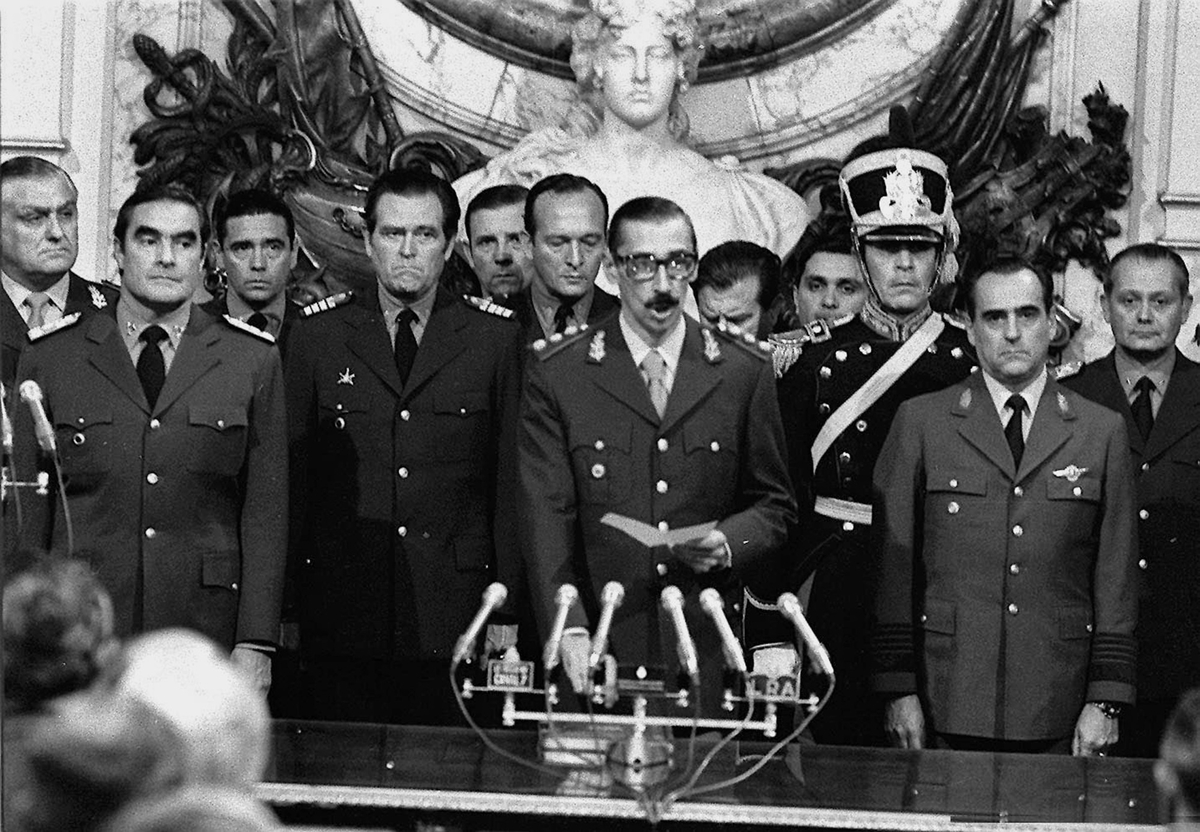
On March 24, 1976, Argentina underwent a dramatic and pivotal shift in its political landscape with a military coup that deposed President Isabel Perón. This coup marked the beginning of a brutal military dictatorship that would rule the country until 1983, a period characterized by severe human rights abuses, economic turmoil, and social repression.
Background
Isabel Perón's Presidency
Isabel Perón, the third wife of former President Juan Domingo Perón, assumed the presidency after her husband's death in July 1974. She became the world's first female president, but her tenure was fraught with challenges. Isabel Perón struggled to manage Argentina's severe economic difficulties, political instability, and escalating violence between left-wing guerrillas and right-wing death squads.
Economic and Social Crisis
During her presidency, Argentina faced hyperinflation, increasing foreign debt, and a sharp decline in living standards. Labor strikes and social unrest were rampant, fueled by the economic crisis and political uncertainty. The government’s inability to control the violence and economic instability eroded public confidence and set the stage for military intervention.
The Coup
Execution of the Coup
In the early hours of March 24, 1976, the Argentine military, led by General Jorge Rafael Videla, Admiral Emilio Eduardo Massera, and Brigadier General Orlando Ramón Agosti, orchestrated a coup d'état. Isabel Perón was arrested and detained, and the military swiftly took control of the government, dissolving the legislature and suspending the constitution.
Justification and Support
The military justified the coup as a necessary action to restore order and stability. Many in the upper and middle classes, as well as business sectors, initially supported the coup, hoping it would curb inflation, end labor unrest, and eliminate left-wing guerrilla movements. The junta promised to restore economic stability and eradicate subversive elements.
The Military Regime
Repression and the "Dirty War"
The new regime, officially called the National Reorganization Process (Proceso de Reorganización Nacional), quickly implemented a campaign of severe repression. Known as the "Dirty War" (Guerra Sucia), this campaign targeted anyone suspected of leftist sympathies, including political opponents, activists, intellectuals, and ordinary citizens. Tens of thousands of people were detained, tortured, and disappeared.
Economic Policies
Economically, the military regime pursued neoliberal policies under the guidance of Economy Minister José Alfredo Martínez de Hoz. These policies included privatization, deregulation, and reductions in state spending. While these measures aimed to stabilize the economy, they led to increased unemployment, social inequality, and the dismantling of Argentina's industrial base.
Human Rights Violations
The period was marked by egregious human rights violations. The regime operated clandestine detention centers where prisoners were subjected to torture and extrajudicial killings. Human rights organizations estimate that between 10,000 to 30,000 people were disappeared during this time. The Mothers of the Plaza de Mayo, an association of mothers whose children were disappeared, became a symbol of resistance and demanded accountability for the regime's actions.
Fall of the Regime
Falklands War and Economic Failure
By the early 1980s, the regime faced growing dissent due to its economic failures and human rights abuses. The Falklands War (Guerra de las Malvinas) in 1982, where Argentina suffered a humiliating defeat to the United Kingdom, further discredited the military government. The loss exacerbated economic problems and sparked widespread public protests.
Return to Democracy
In 1983, amid increasing pressure and unrest, the military regime agreed to hold democratic elections. Raúl Alfonsín, a member of the Radical Civic Union (Unión Cívica Radical, UCR), won the presidency, signaling the end of the military dictatorship. The return to democracy brought about efforts to address the human rights abuses of the Dirty War, including the prosecution of key military figures.
Legacy
The 1976 military coup and the subsequent dictatorship left an indelible mark on Argentina's history. The period is remembered for its profound human rights abuses, economic challenges, and the struggle for justice and reconciliation. The legacy of the coup continues to influence Argentine politics, society, and the collective memory of the nation.
Conclusion
The military coup of March 1976, which deposed Isabel Perón, ushered in one of the darkest chapters in Argentina's history. The ensuing dictatorship led to widespread repression, economic upheaval, and a profound human toll. The legacy of this period remains a critical point of reflection for Argentina as it continues to grapple with the past and strive for justice and human rights.
#MomentsOfLife #MoofLife_Moment #MoofLife #ArgentinaHistory #MilitaryCoup #DirtyWar #HumanRights #IsabelPeron #SouthAmericanPolitics
Explore the Life Moments of
 AI Twin