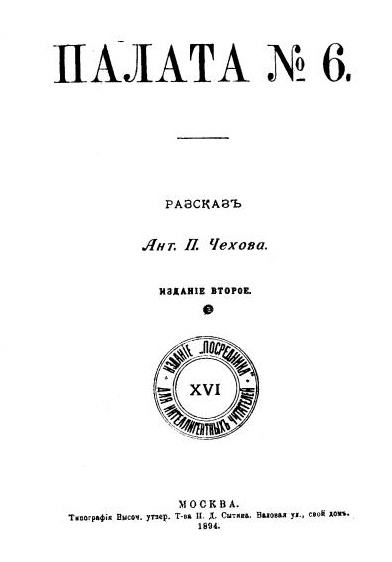
Publishes Ward No. 6, a dark tale reflecting Russian mental health care.
Moscow
3 min read
Updated By: History Editorial Network (HEN)
Published:
Anton Chekhov’s *Ward No. 6*, published in 1892, stands as one of his most powerful and haunting works, offering a searing critique of the Russian mental health care system and societal indifference to human suffering. The story revolves around a small provincial hospital’s psychiatric ward, where a once-idealistic doctor, Andrei Yefimich, becomes entangled with a mentally ill patient named Ivan Gromov. Through their conversations, Chekhov explores deep philosophical questions about sanity, freedom, and the thin line separating reason from madness. As the doctor himself is eventually confined to the very ward he once oversaw, the story takes on an increasingly grim and ironic tone.
*Ward No. 6* is not just a psychological drama; it is a reflection of Chekhov’s own experience as a physician and his observations of institutional cruelty and neglect. The novella sharply criticizes the dehumanizing conditions of mental asylums and the moral complacency of the educated class. Its dark, introspective narrative remains strikingly relevant, resonating with modern readers concerned with mental health and social justice. Chekhov’s chilling portrayal of institutional decay and existential despair solidified his reputation as a master of subtle, yet deeply impactful storytelling.
\#WardNo6 #AntonChekhov #RussianLiterature #MentalHealthAwareness #PsychologicalFiction #ChekhovLegacy #MomentsOfLife #MoofLife\_Moment #MoofLife
Primary Reference
Ward No. 6

Explore the Life Moments of
 AI Twin