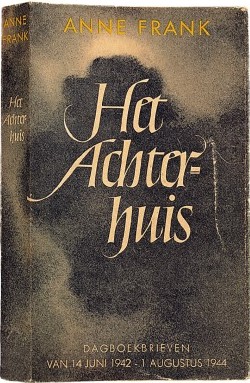
First Dutch edition of Anne Frank's diary published
Germany
Literature
Biography
4 min read
Updated By: History Editorial Network (HEN)
Published:
Updated:
The first Dutch edition of Anne Frank's diary, titled 'Het Achterhuis' (translated as 'the rear house'), was published in the aftermath of World War II. This publication marked a pivotal moment in the documentation of the Holocaust and the experiences of Jewish individuals during this tumultuous period. Anne Frank, a Jewish girl who went into hiding with her family to escape Nazi persecution, began writing her diary while in hiding. The diary serves as a personal account of her thoughts, fears, and aspirations, providing insight into the life of a young girl during a time of great adversity. The publication of 'Het Achterhuis' not only brought Anne's story to a wider audience but also highlighted the importance of preserving personal narratives in understanding historical events. The diary was later translated into English as 'The Diary of a Young Girl', further expanding its reach and impact across different cultures and languages.
The impact of Anne Frank's diary has been profound, as it has become one of the most read and studied texts related to the Holocaust. It has been translated into over 70 languages and has sold millions of copies worldwide. The diary has also inspired numerous adaptations, including plays and films, which have contributed to its status as a crucial educational tool in teaching about the Holocaust and the dangers of discrimination and intolerance. The publication of 'Het Achterhuis' has thus played a significant role in ensuring that Anne Frank's voice continues to resonate with new generations, serving as a reminder of the human capacity for hope and resilience in the face of unimaginable hardship.
#mooflife
#MomentOfLife
#AnneFrank
#HetAchterhuis
#Holocaust
#DiaryOfAYoungGirl
#WorldWarIi
Primary Reference
The Diary of a Young Girl

Explore the Life Moments of
 AI Twin