Wolf Children
Entertainment
6 min read
Updated By: History Editorial Network (HEN)
Published:
Updated:
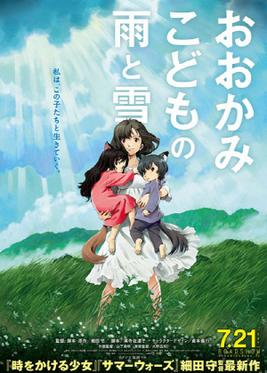
Wolf Children (2012) is a Japanese animated drama film written and directed by Mamoru Hosoda and produced by Studio Chizu. The story follows Hana, a young university student who falls in love with a man who turns out to be a wolfman—the last of his kind. After his sudden death, Hana is left to raise their two children, Yuki and Ame, who inherit their father’s ability to transform between human and wolf. Struggling to protect their secret and provide a stable life, Hana moves to the countryside to raise them in solitude. As the children grow, they must each choose their own path: one toward humanity, and the other toward the wild.
The film is visually stunning, blending realistic backgrounds with soft character animation and subtle supernatural elements. Hosoda focuses on domestic moments and emotional beats over fantasy spectacle, crafting a deeply intimate story of motherhood, identity, and the tension between nature and society. The animation captures both the warmth of home life and the untamed beauty of the natural world, with standout sequences like the children’s snowy romp or their transformations into wolves—rendered with grace and emotional precision. Takagi Masakatsu’s piano-driven score adds a gentle, melancholic tone that underlines the film’s reflective mood.
At the box office, Wolf Children was a commercial success, grossing over ¥4.2 billion (~$55 million USD) worldwide. It performed especially well in Japan and France, where it benefited from Hosoda’s growing reputation as an auteur in the vein of Hayao Miyazaki. Its international reception was bolstered by critical acclaim and widespread distribution through anime festivals and art house theaters.
Critics praised Wolf Children for its emotional honesty, beautiful animation, and powerful thematic depth. It holds a 94% approval rating on Rotten Tomatoes, with reviewers highlighting it as one of the most poignant portrayals of parenthood and coming-of-age in animation. Rather than rely on dramatic conflict, the film builds emotional weight through years of change, personal growth, and quiet sacrifice.
The film won numerous awards, including Animation of the Year at the 36th Japan Academy Prize, Best Animated Feature at the Asia Pacific Screen Awards, and the Mainichi Film Award for Best Animation Film. It was also selected as Best Animated Feature at the Sitges Film Festival and earned accolades at Annecy and other global festivals.
Wolf Children’s legacy lies in its heartfelt depiction of motherhood and the struggles of raising children who don’t fit societal norms. It has become a modern classic in anime, often cited alongside Spirited Away and Grave of the Fireflies for its emotional resonance. For many, it cemented Mamoru Hosoda’s place as one of the most vital storytellers in contemporary animation.
Primary Reference
Okami kodomo no ame to yuki (2012)

Explore the Life Moments of
 AI Twin