Princess Mononoke
Entertainment
6 min read
Updated By: History Editorial Network (HEN)
Published:
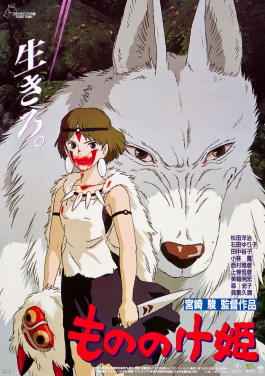
Princess Mononoke (1997) is a Japanese animated epic historical fantasy film written and directed by Hayao Miyazaki and produced by Studio Ghibli. Set during Japan’s late Muromachi period, the film follows Ashitaka, a young Emishi prince cursed by a boar demon, as he journeys west to find a cure. He becomes embroiled in a conflict between the gods of a sacred forest and humans from Iron Town, led by the ambitious and pragmatic Lady Eboshi. There, he meets San—a human girl raised by wolves—who fights fiercely to protect the forest. The film explores themes of industrialization, environmental destruction, spiritual decay, and moral ambiguity without traditional heroes or villains.
Princess Mononoke was a massive success in Japan, grossing ¥20.18 billion (approx. $160 million) during its domestic run, making it the highest-grossing film in Japanese history at the time (before being surpassed by Titanic and later Spirited Away). Worldwide, the film earned over $169 million, a record-breaking figure for an anime film before the international success of later Ghibli works. It also became a critical commercial stepping stone for Studio Ghibli’s global expansion.
Critically, the film was hailed as a masterpiece. It holds a 93% score on Rotten Tomatoes and an 83 Metascore on Metacritic. Reviewers praised its mature storytelling, complex characters, and breathtaking animation. Its blend of folklore, violence, and ecological themes marked a departure from Miyazaki’s earlier, more family-friendly films. The hand-drawn animation, combined with subtle CG effects, pushed technical and artistic boundaries. The English dub, produced by Miramax and adapted by Neil Gaiman, helped introduce Ghibli to wider Western audiences, despite a limited theatrical release in the U.S.
In terms of accolades, Princess Mononoke won the Japanese Academy Award for Best Picture, the first animated film ever to do so. It also received the Mainichi Film Award for Best Film, and won several international prizes, including Best Animation at the Annie Awards. Though not nominated for an Oscar (in part due to the Academy's neglect of animation outside Disney at the time), its influence on both Eastern and Western animation has been profound.
The film’s legacy is monumental. It solidified Studio Ghibli as a dominant force in animation, influenced countless directors, and laid the groundwork for the environmental and spiritual themes seen in later Miyazaki works. Princess Mononoke remains one of Ghibli’s most beloved and respected films, often cited as a cultural turning point in animated storytelling.
Primary Reference
Princess Mononoke DVD confirmed

Explore the Life Moments of
 AI Twin