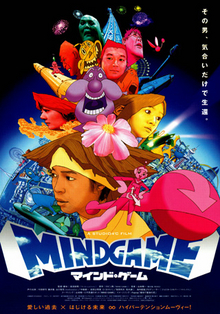
Mind Game
Entertainment
7 min read
Updated By: History Editorial Network (HEN)
Published:
Updated:
Mind Game (2004) is a wildly experimental Japanese animated film directed by Masaaki Yuasa and produced by Studio 4°C. Based on the manga by Robin Nishi, the film defies genre classification—melding comedy, drama, romance, action, and surrealism into a chaotic yet deeply emotional ride. The story follows Nishi, a timid, failing manga artist who is shot in the butt and killed by a yakuza thug during a confrontation at a diner. After a brief, abstract encounter with a constantly shifting version of "God," Nishi refuses to accept death and forces his way back into life—triggering an explosive second chance to live fully, love bravely, and reject fear.
From that moment, Mind Game spirals into an unpredictable stream of consciousness narrative. Nishi reunites with his childhood crush Myon, becomes entangled with yakuza, gets swallowed by a giant whale, and embarks on a transformative journey with a cast of lost, damaged people trying to reclaim agency over their lives. Rather than a traditional plot arc, the film unfolds more like a spiritual awakening—juxtaposing absurdist comedy, hyper-kinetic chase scenes, philosophical asides, and deeply personal reflection.
Visually, Mind Game is a revelation. It uses a mix of animation techniques: hand-drawn sequences, rotoscoped photography, sudden stylistic shifts, and grotesquely distorted expressions. Yuasa and his team eschew polish in favor of raw intensity, constantly changing the visual tone to reflect character psychology or emotional states. It is often chaotic, even overwhelming—but never boring. Every frame bursts with creativity and unpredictability.
The film had a limited release in Japan and struggled at the box office initially due to its unconventional nature. It grossed under $100,000 USD, primarily in art house circuits. However, Mind Game quickly developed a massive cult following after screening at international festivals and being released on home media. It became one of the most talked-about underground anime films of the 2000s and the work that launched Masaaki Yuasa into critical acclaim.
Critically, Mind Game was universally praised by those who saw it. It holds a 95% Rotten Tomatoes rating and was compared to Yellow Submarine, Fear and Loathing in Las Vegas, and the works of Satoshi Kon and Terry Gilliam—but with a more raw, personal punch. Critics lauded it as a celebration of the human spirit, individuality, and artistic freedom.
Mind Game won numerous awards, including Best Film, Best Director, and Best Script at the 2005 Fantasia International Film Festival, as well as the Grand Prize at the Japan Media Arts Festival. It also won accolades at the Ottawa International Animation Festival, and is frequently cited as one of the most important animated films of the 21st century.
Its legacy is immense. Mind Game is not just a film—it’s an experience. It pushed the boundaries of animation both technically and thematically, paved the way for Yuasa’s later masterpieces (The Tatami Galaxy, Devilman Crybaby, Inu-Oh), and inspired animators worldwide to embrace chaos, imperfection, and emotional honesty. Few films have captured the desperation and beauty of being alive quite like this.
Primary Reference
Director has whale of a time making experimental 'Mind Game

Explore the Life Moments of
 AI Twin