Eads Bridge Opens Using Carnegie Steel
Engineering
Historical Landmarks
Steel Technology
4 min read
Updated By: History Editorial Network (HEN)
Published:
Updated:
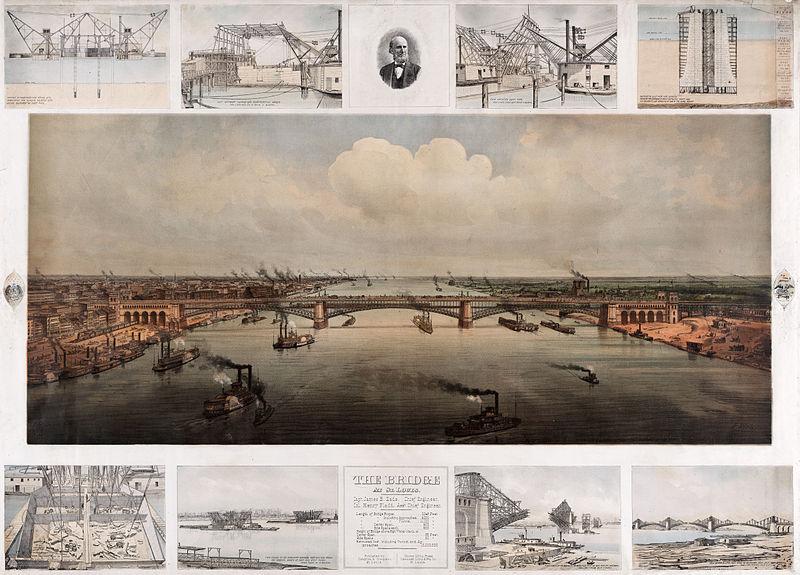
The Eads Bridge, spanning the Mississippi River at St. Louis, Missouri, was a pivotal engineering project that utilized steel technology in its construction. Andrew Carnegie, through his company Keystone, played a crucial role by supplying the steel for the bridge and holding shares in the project. This bridge was not only significant for its size and design but also served as a proof-of-concept for the use of steel in large-scale construction. The successful completion of the Eads Bridge demonstrated the viability of steel as a primary material for bridges, which had previously relied on iron. The innovative use of steel in this project marked a turning point in engineering practices and opened up a new market for steel production, leading to increased demand and advancements in steel manufacturing processes.
The impact of the Eads Bridge extended beyond its immediate function as a transportation link. It facilitated trade and commerce in the region, contributing to the economic growth of St. Louis and surrounding areas. The bridge's design, which included a unique arch structure, showcased the potential of steel to create durable and long-lasting infrastructure. As a result, the Eads Bridge influenced future bridge designs and construction methods, paving the way for the widespread adoption of steel in civil engineering. The success of this project also solidified Carnegie's position in the steel industry, allowing him to expand his business and influence the development of modern infrastructure across the United States.
#mooflife
#MomentOfLife
#EadsBridge
#CarnegieSteel
#SteelTechnology
#MississippiRiver
#CivilEngineering
Primary Reference
Eads Bridge

Explore the Life Moments of
 AI Twin