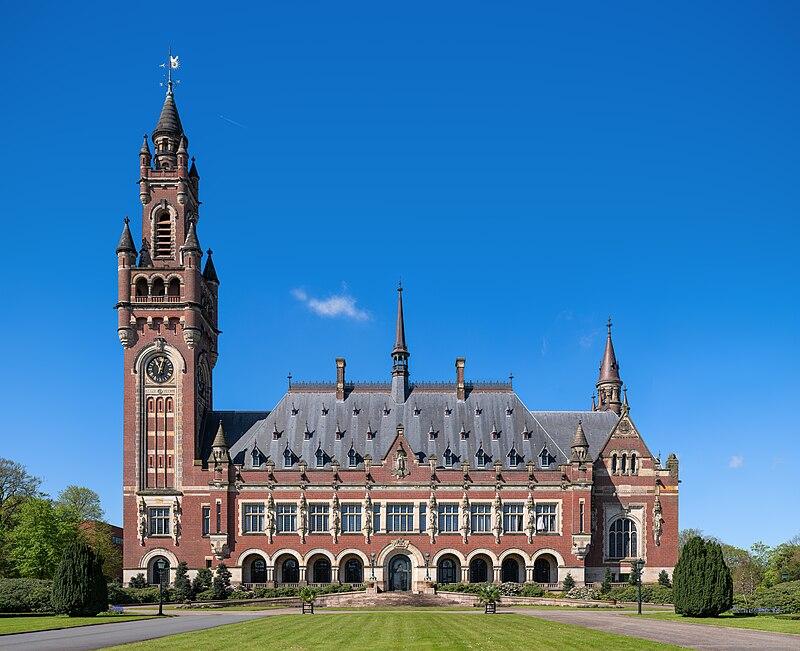
Dedication of the Peace Palace
Peace Studies
International Relations
Historical Events
4 min read
Updated By: History Editorial Network (HEN)
Published:
Updated:
The Peace Palace in The Hague serves as a symbol of international peace and justice. Founded by Andrew Carnegie, the Palace was established to house the Permanent Court of Arbitration and later became the seat of the International Court of Justice. Carnegie's vision for the Peace Palace was rooted in his belief that diplomacy and legal frameworks could effectively resolve conflicts between nations, thereby reducing the likelihood of war. His commitment to peace was evident in his establishment of the Carnegie Endowment for International Peace, which aimed to promote peaceful resolutions and foster international cooperation. The Peace Palace was designed to be a physical manifestation of these ideals, providing a space where nations could come together to discuss and resolve their differences through dialogue rather than conflict.
The impact of the Peace Palace has been profound in the realm of international relations. It has hosted numerous significant legal proceedings and diplomatic discussions, contributing to the development of international law. The establishment of the Permanent Court of Arbitration within the Palace marked a pivotal moment in the evolution of international dispute resolution. Statistics indicate that since its inception, the Court has handled thousands of cases, reinforcing the importance of legal mechanisms in maintaining global peace. Carnegie's prediction that the end of war would come as surely as day follows night reflects his optimism about the potential for human cooperation and the effectiveness of legal institutions in preventing conflict. The Peace Palace continues to stand as a testament to these ideals, inspiring future generations to pursue peace through understanding and legal frameworks.
#mooflife
#MomentOfLife
#PeacePalace
#AndrewCarnegie
#InternationalLaw
#Diplomacy
#ConflictResolution
Primary Reference
Peace Palace
Explore the Life Moments of
 AI Twin