Theban hegemony
Greece
Ancient Civilizations
4 min read
Updated By: History Editorial Network (HEN)
Published:
Updated:
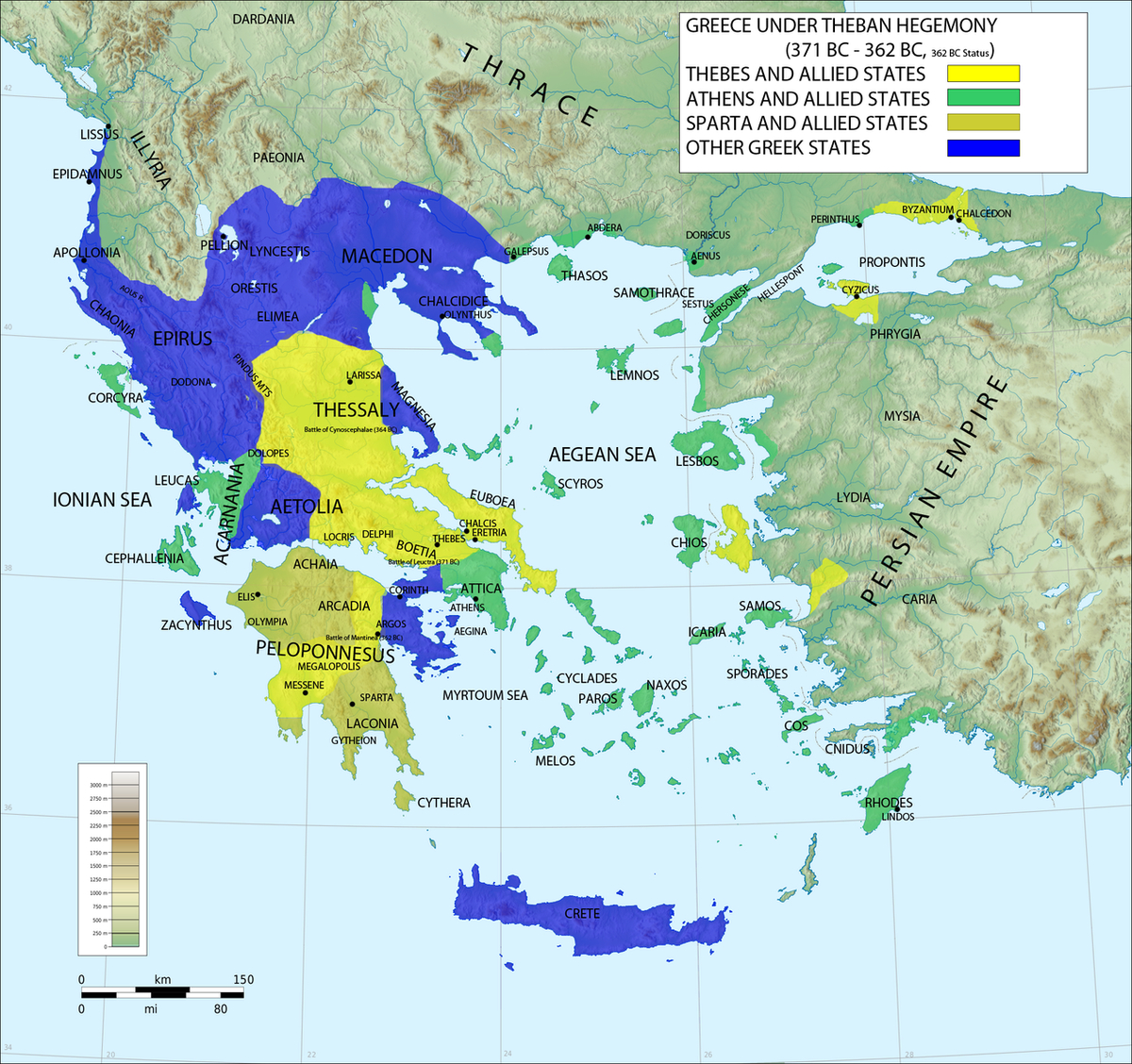
During the early 4th century BC, the political landscape of ancient Greece underwent a significant transformation. Initially, Spartan hegemony replaced Athenian dominance, establishing Sparta as a leading power in the region. This shift was a direct consequence of the Peloponnesian War, which weakened Athens and allowed Sparta to assert its influence over the Greek city-states. However, this dominance was not to last. Thebes, a city-state in Boeotia, began to rise in power, leading to the formation of the Boeotian League. This coalition of city-states marked a new phase in Greek politics, as Thebes challenged Spartan authority and sought to unify the region under its leadership. The Boeotian League became a formidable force, particularly after the Battle of Leuctra, where Theban forces decisively defeated the Spartans, further solidifying their power and influence in Greece.
The impact of this power shift was profound, as it not only altered the balance of power among the Greek city-states but also set the stage for the eventual rise of Macedon. The League of Corinth, established under Macedonian leadership, emerged as a dominant political entity, effectively ending the era of fragmented city-state rivalries. This transition marked a pivotal moment in Greek history, as it led to the unification of Greece under Macedonian rule, which would have lasting implications for the region. The rise of Thebes and the Boeotian League exemplified the dynamic nature of Greek politics, characterized by shifting alliances and the constant struggle for power among city-states. The eventual dominance of Macedon highlighted the vulnerabilities of the Greek city-states and their inability to maintain a unified front against external threats.
#mooflife
#MomentOfLife
#Thebes
#BoeotianLeague
#Macedon
#GreekHistory
#SpartanHegemony
Primary Reference
https://en.wikipedia.org/wiki/Theban_hegemony

Explore the Life Moments of
 AI Twin