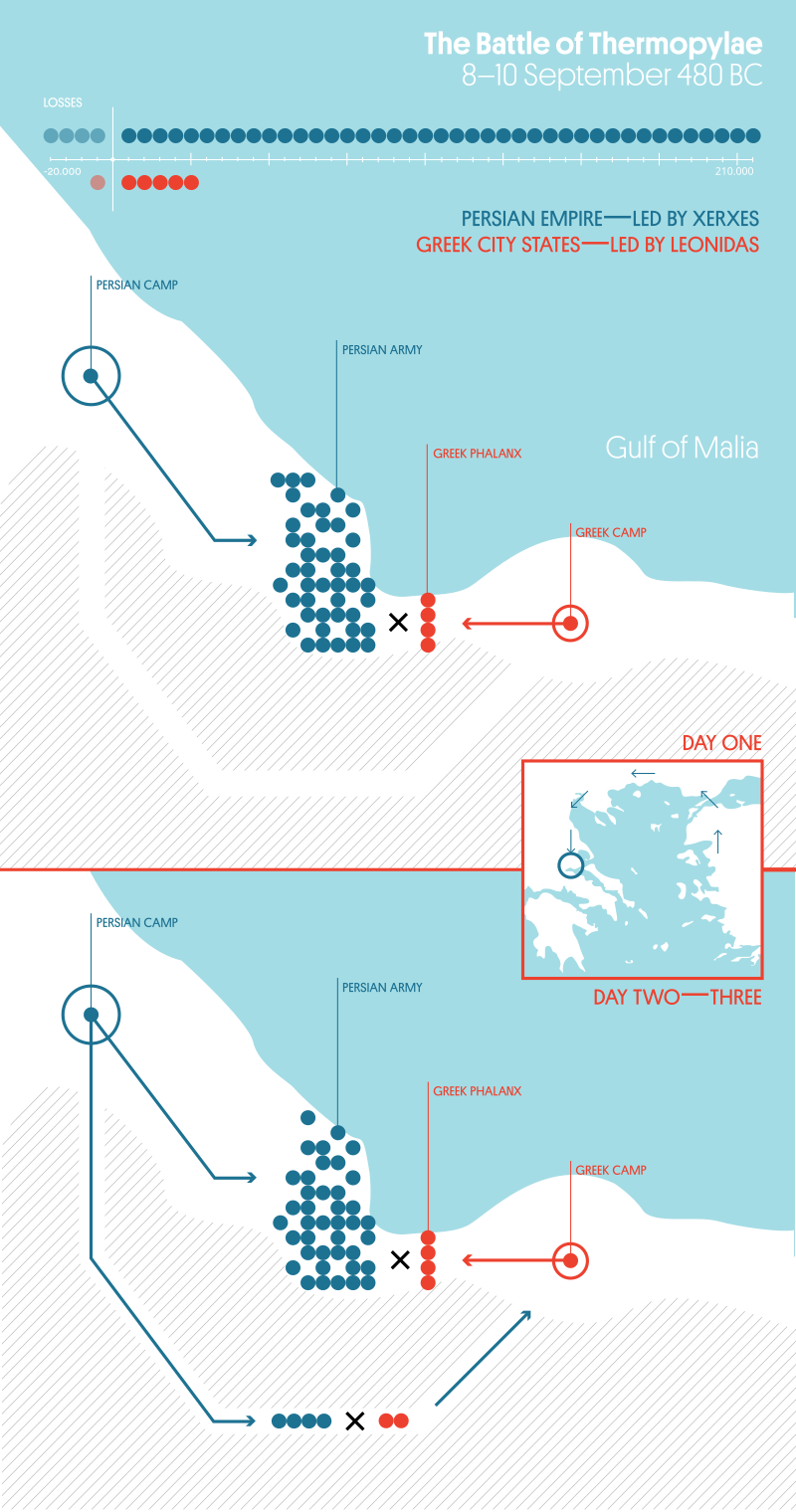
The Battle of Thermopylae
Greece
Battles
Ancient
4 min read
Updated By: History Editorial Network (HEN)
Published:
Updated:
The Battle of Thermopylae was a pivotal confrontation during the Persian invasion of Greece. A small contingent of Greek forces, primarily composed of 300 Spartans under King Leonidas, defended a narrow pass at Thermopylae against a vastly larger Persian army led by King Xerxes. The Greeks strategically chose this location to leverage the terrain, which limited the effectiveness of the Persian numerical advantage. For several days, the Spartans and their allies held their ground, demonstrating remarkable discipline and combat prowess. This battle became emblematic of courage and sacrifice, as the Greeks fought to protect their homeland despite overwhelming odds. The stand at Thermopylae ultimately ended when a Greek traitor revealed a secret path to the Persians, allowing them to outflank the defenders. The battle resulted in the death of Leonidas and his men, but it served to inspire other Greek city-states to unite against the Persian threat.
Simultaneously, the Battle of Himera occurred, where Gelon, the tyrant of Syracuse, successfully repelled a Carthaginian invasion. This battle was significant in its own right, as it showcased the military capabilities of the Greek forces outside of the mainland. The combined efforts of the Greeks at Thermopylae and Himera highlighted the broader resistance against foreign invasions during this period. The outcomes of these battles had lasting implications for Greek unity and identity, ultimately contributing to the eventual Greek victories in subsequent engagements against the Persians. The legacy of Thermopylae, in particular, has been immortalized in history as a symbol of heroism and the struggle for freedom.
#mooflife
#MomentOfLife
#BattleOfThermopylae
#PersianInvasion
#GreekHistory
#SpartanWarriors
#BattleOfHimera
Primary Reference
https://en.wikipedia.org/wiki/Battle_of_Thermopylae

Explore the Life Moments of
 AI Twin