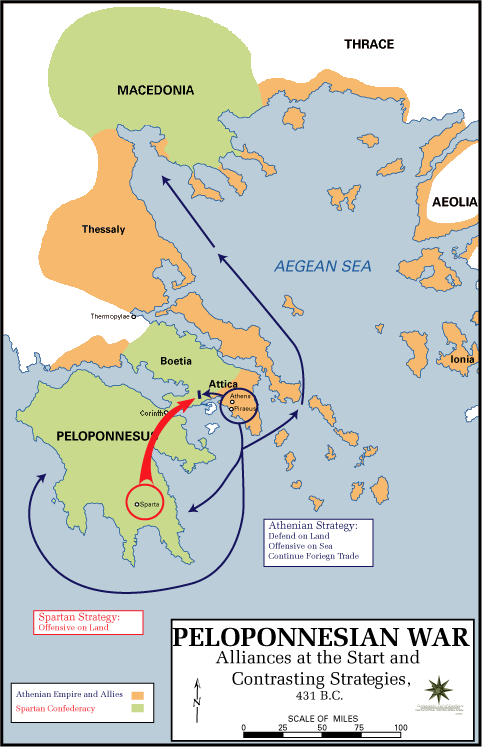
Start of the Peloponnesian War
Greece
Historical Events
Ancient Wars
Greek History
3 min read
Updated By: History Editorial Network (HEN)
Published:
Updated:
The Peloponnesian War marked a pivotal conflict between the city-states of Athens and Sparta, rooted in the tensions that escalated after the Thirty Years' Peace. This treaty, which aimed to establish a truce between the two powers, ultimately failed to maintain lasting peace. Relations between Athens and Sparta deteriorated throughout the 430s, leading to the outbreak of war. The initial phase of the conflict was characterized by Spartan invasions of Attica, which were largely ineffective and did not achieve their strategic objectives. Meanwhile, Athens demonstrated military prowess by engaging successfully with the Corinthian empire in northwest Greece, showcasing its naval strength and ability to project power beyond its immediate territory.
The war had profound implications for both city-states and the wider Greek world. Athens, despite facing internal challenges such as a devastating plague that claimed the life of its prominent leader Pericles, managed to maintain its empire and resist Spartan advances. The conflict not only reshaped alliances and power dynamics in ancient Greece but also set the stage for a prolonged struggle that would ultimately lead to significant shifts in political and military strategies among the Greek city-states. The Peloponnesian War is often viewed as a critical turning point in classical antiquity, influencing subsequent historical developments and the eventual rise of Macedonian power.
#mooflife
#MomentOfLife
#PeloponnesianWar
#Athens
#Sparta
#AncientGreece
#MilitaryHistory
Primary Reference
Peloponnesian War

Explore the Life Moments of
 AI Twin