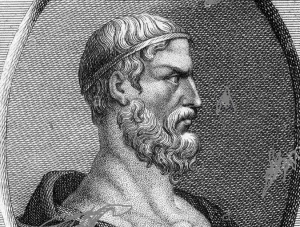
Reforms of Draco in Athens
Greece
Ancient History
Political Reforms
Athenian Democracy
4 min read
Updated By: History Editorial Network (HEN)
Published:
Updated:
Draco's reforms in Athens marked a pivotal shift in the governance of the city-state. He is credited with creating a written code of laws, which was a significant departure from the oral traditions that had previously governed Athenian society. This codification aimed to reduce the arbitrary nature of justice and provide a clear framework for legal proceedings. One of the most notable aspects of Draco's reforms was the establishment of the citizens' assembly, known as the Ecclesia. This assembly allowed all citizens to attend discussions regarding city policy, fostering a sense of civic engagement among the populace. However, it is important to note that while attendance was open to all citizens, the poorest members of society were still excluded from addressing the assembly or holding public office, which highlighted the limitations of Draco's reforms in achieving true democratic participation.
The impact of Draco's reforms was profound, as they laid the groundwork for future political developments in Athens. The written laws provided a reference point for legal matters, which helped to mitigate the power of aristocratic judges who had previously wielded significant influence over legal decisions. Although Draco's laws were often seen as harsh, they represented a move towards a more structured legal system. The reforms also set the stage for subsequent changes by later leaders, such as Solon, who would further expand the rights of citizens and address the inequalities that persisted in Athenian society. Overall, Draco's contributions to Athenian governance were crucial in the evolution of democracy, as they initiated a process that would eventually lead to broader participation in political life.
#mooflife
#MomentOfLife
#Draco
#AthenianReforms
#Citizens'Assembly
#Ecclesia
#AthenianDemocracy
Primary Reference
https://en.wikipedia.org/wiki/Draco_(legislator)

Explore the Life Moments of
 AI Twin