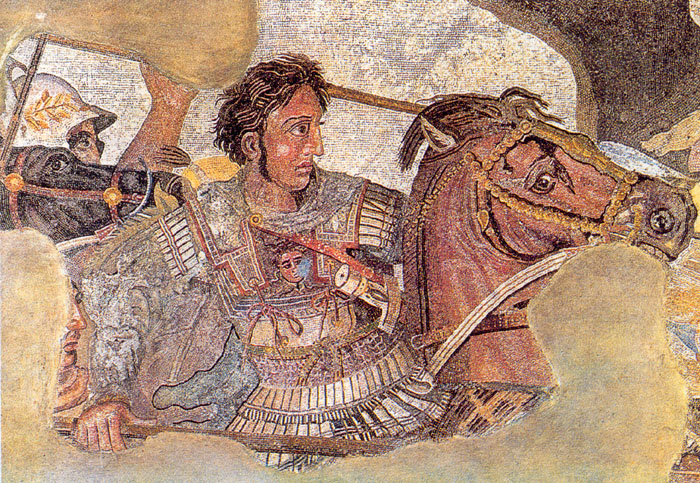
Death of Alexander the Great
Greece
Historical Figures
Ancient History
Military Campaigns
3 min read
Updated By: History Editorial Network (HEN)
Published:
The death of Alexander the Great marked a pivotal transition in ancient history, concluding his extensive military campaigns and initiating the Hellenistic period. Alexander, who had succeeded his father Philip II, embarked on a series of conquests that expanded the Macedonian Empire across three continents, including significant victories against the Persian Empire. His military strategies and tactics are still studied in military academies around the world. Following his death, the vast territories he had conquered faced uncertainty and fragmentation. His plans to invade Arabia and North Africa were left unfulfilled, leading to a power vacuum that resulted in the division of his empire among his generals, known as the Diadochi. This fragmentation led to the establishment of several Hellenistic kingdoms, which influenced the cultural and political landscape of the Mediterranean and Near East for centuries. The spread of Greek culture, language, and ideas during this period had a lasting impact on the regions that were once part of Alexander's empire, facilitating cultural exchanges and the blending of traditions. The Hellenistic period is characterized by advancements in art, science, and philosophy, as well as the establishment of cities that became centers of learning and culture, such as Alexandria in Egypt.
#mooflife
#MomentOfLife
#AlexanderTheGreat
#HellenisticPeriod
#MacedonianEmpire
#AncientHistory
#MilitaryCampaigns

Explore the Life Moments of
 AI Twin