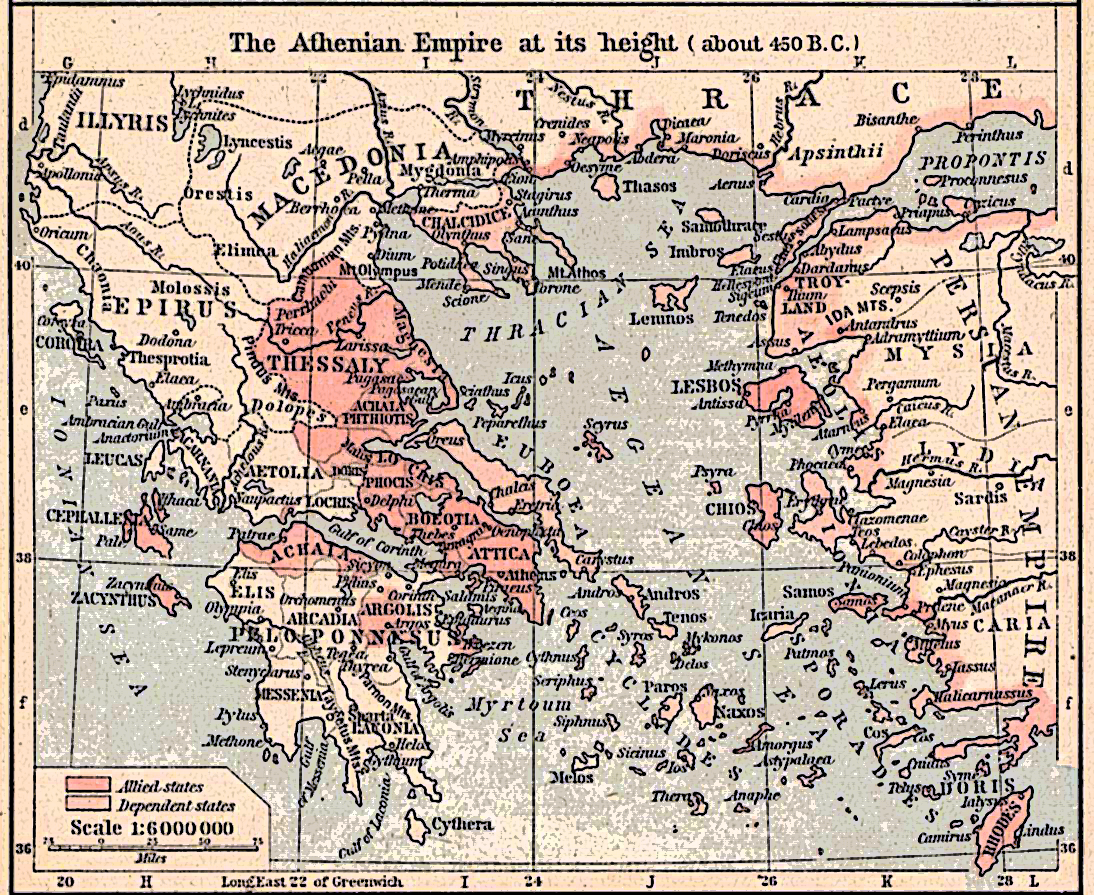
Athenian and Delian League Dominance
Greece
Classical History
Ancient Greece
Architecture
4 min read
Updated By: History Editorial Network (HEN)
Published:
Updated:
During the 5th century BC, Athens emerged as a dominant power in the Greek world, primarily through its leadership of the Delian League. This alliance was formed initially as a response to the Persian threat, with member states contributing ships and funds to a common defense. Over time, Athens transformed the Delian League into an instrument of its own imperial ambitions, exerting control over its allies and using their resources to enhance its own power and cultural achievements. The wealth generated from the League allowed Athens to undertake significant construction projects, including the Parthenon, which became a symbol of Athenian democracy and artistic achievement. The political and military strategies employed by Athens during this period not only solidified its dominance but also set the stage for cultural developments that would influence Western civilization for centuries to come.
The impact of Athenian and Delian League dominance extended beyond military and political realms; it fostered a cultural renaissance characterized by advancements in philosophy, drama, and the arts. The period saw the emergence of notable figures such as Socrates, who laid the groundwork for Western philosophy, and playwrights like Aeschylus and Sophocles, whose works are still performed today. The Athenian model of democracy, although limited in its inclusivity, inspired future political thought and systems. However, this dominance was not without consequences, as it led to tensions with other Greek city-states, particularly Sparta, which would eventually challenge Athenian supremacy. The rivalry culminated in the Peloponnesian War, marking a significant shift in the balance of power in ancient Greece.
#mooflife
#MomentOfLife
#AthenianLeague
#DelianLeague
#ClassicalPeriod
#GreekHistory
#AthenianDemocracy
Primary Reference
https://en.wikipedia.org/wiki/Delian_League

Explore the Life Moments of
 AI Twin