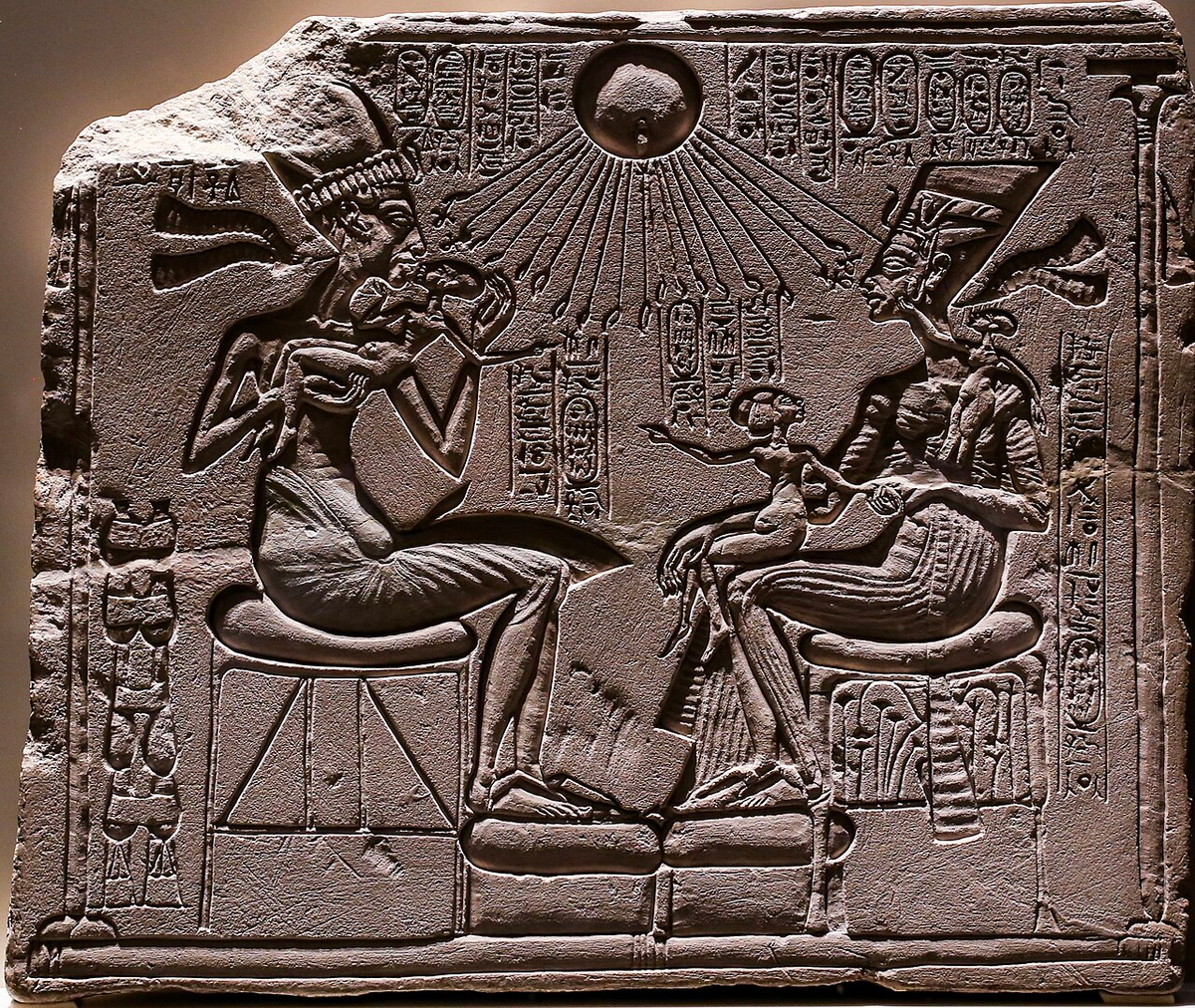
Reign of Akhenaten, who introduced monotheistic worship of Aten.
Egypt
3 min read
Updated By: History Editorial Network (HEN)
Published:
The reign of Akhenaten, formerly known as Amenhotep IV, marked one of the most radical and controversial periods in ancient Egyptian history. Ruling during the 18th Dynasty in the mid-14th century BCE, Akhenaten broke with centuries of religious tradition by introducing the exclusive worship of Aten, the sun disk, as the supreme and only god. This bold shift from Egypt’s longstanding polytheistic beliefs to a form of monotheism is often considered one of the earliest recorded attempts at religious reform. Akhenaten declared Aten the universal creator and altered religious practices, iconography, and even the architecture of temples to reflect this new spiritual vision.
To support his religious revolution, Akhenaten moved the capital from Thebes to a new city he built from scratch, Akhetaten (modern-day Amarna), which became the center of Aten worship. His reign saw dramatic changes in art and culture, with more naturalistic and intimate depictions of the royal family and daily life. However, his focus on religious reform came at the cost of political and military stability, and after his death, traditional religious practices were swiftly restored. Despite its brief duration, Akhenaten’s rule left a lasting impact on the religious and cultural landscape of Egypt and has intrigued scholars and historians for centuries.
\#Akhenaten #AtenWorship #AncientEgypt #MonotheismOrigins #AmarnaPeriod #ReligiousReform #EgyptianPharaoh #MomentsOfLife #MoofLife\_Moment #MoofLife

Explore the Life Moments of
 AI Twin