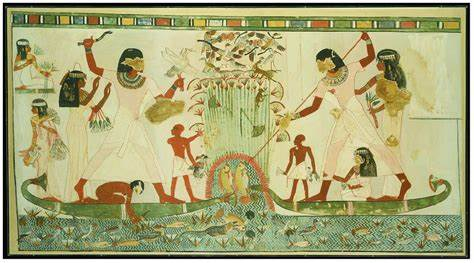
Menna and Family Hunting in the Marshes
Egypt
Ancient Egyptian Art
Archaeology
Historical Artifacts
4 min read
Updated By: History Editorial Network (HEN)
Published:
Updated:
The artwork titled 'Menna and Family Hunting in the Marshes' is located in the tomb of Menna, a notable figure from ancient Egypt. This tomb, which dates back to around 1400 BC, showcases a scene that illustrates Menna and his family engaged in hunting activities within marshy landscapes. This depiction is significant as it reflects the daily life and social practices of the elite in ancient Egyptian society. The marshes were known for their rich biodiversity, providing a source of food and resources, which made hunting a vital activity for sustenance and status. The artwork serves not only as a representation of leisure and skill but also as a means of conveying the importance of hunting in the context of social hierarchy and family bonding in ancient Egypt.
The artistic style of this piece adheres to the conventions of ancient Egyptian art, characterized by its strict adherence to form and symbolism. The figures are depicted in a highly stylized manner, following the established iconography that was prevalent during the Old Kingdom. This approach to art was not merely aesthetic; it was deeply intertwined with the cultural and religious beliefs of the time. The scenes depicted in tombs were intended to serve functional purposes, such as ensuring the deceased's safe passage to the afterlife and providing them with the necessary provisions. The representation of Menna and his family in this hunting scene highlights the values of family, prosperity, and the connection to nature, which were central to ancient Egyptian life. Overall, this artwork is a valuable artifact that offers insights into the social dynamics, cultural practices, and artistic conventions of ancient Egypt.
#mooflife
#MomentOfLife
#AncientEgypt
#Menna
#Hunting
#TombArt
#CulturalPractices

Explore the Life Moments of
 AI Twin