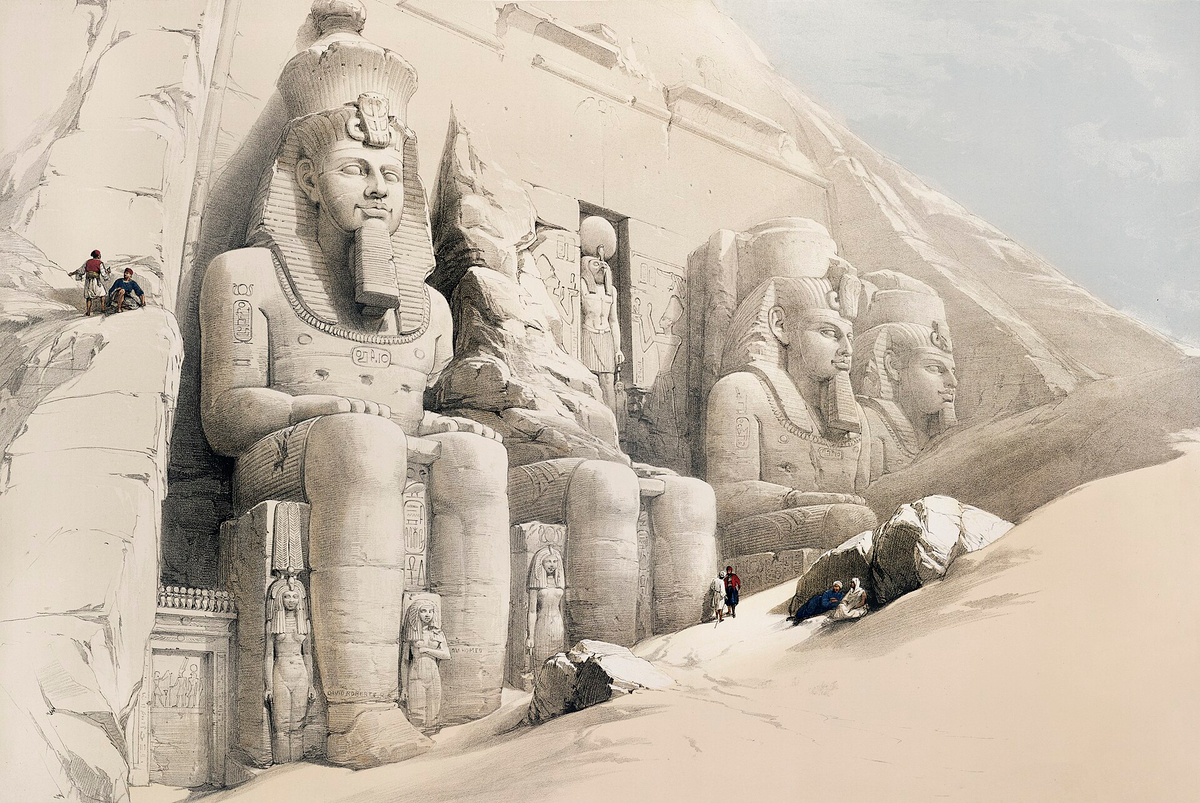
Massive temple of Ramesses II constructed at Abu Simbel.
Egypt
4 min read
Updated By: History Editorial Network (HEN)
Published:
The massive temple of Ramesses II at Abu Simbel stands as one of the most awe-inspiring monuments of ancient Egyptian architecture and engineering. Carved directly into a sandstone cliff on the western bank of the Nile, near Egypt’s southern border, the temple was built to honor both Ramesses II and the gods, especially Ra-Horakhty, Ptah, and Amun. Dominated by four colossal statues of the pharaoh himself, each standing about 20 meters tall, the façade projects a powerful image of divine kingship and imperial grandeur. The interior is equally impressive, with a series of halls and sanctuaries adorned with intricate reliefs depicting Ramesses’s military victories, particularly the Battle of Kadesh, as well as scenes of ritual worship.
Beyond its architectural magnificence, the temple of Abu Simbel also serves as a symbol of ancient Egypt's enduring legacy and modern preservation efforts. In the 1960s, the temple complex was threatened by the rising waters of the Nile due to the construction of the Aswan High Dam. In an unprecedented feat of archaeological preservation, the entire temple was carefully cut into large blocks and relocated to a higher location nearby, safeguarding it for future generations. Today, Abu Simbel not only reflects the glory of Ramesses II’s reign but also stands as a testament to international collaboration and the value of cultural heritage. Its grandeur continues to captivate visitors and scholars alike, bridging the ancient past with modern admiration.
\#MomentsOfLife #MoofLife\_Moment #MoofLife #AbuSimbel #RamessesII #AncientEgypt #CulturalHeritage #TempleArchitecture #HistoricalPreservation
Explore the Life Moments of
 AI Twin