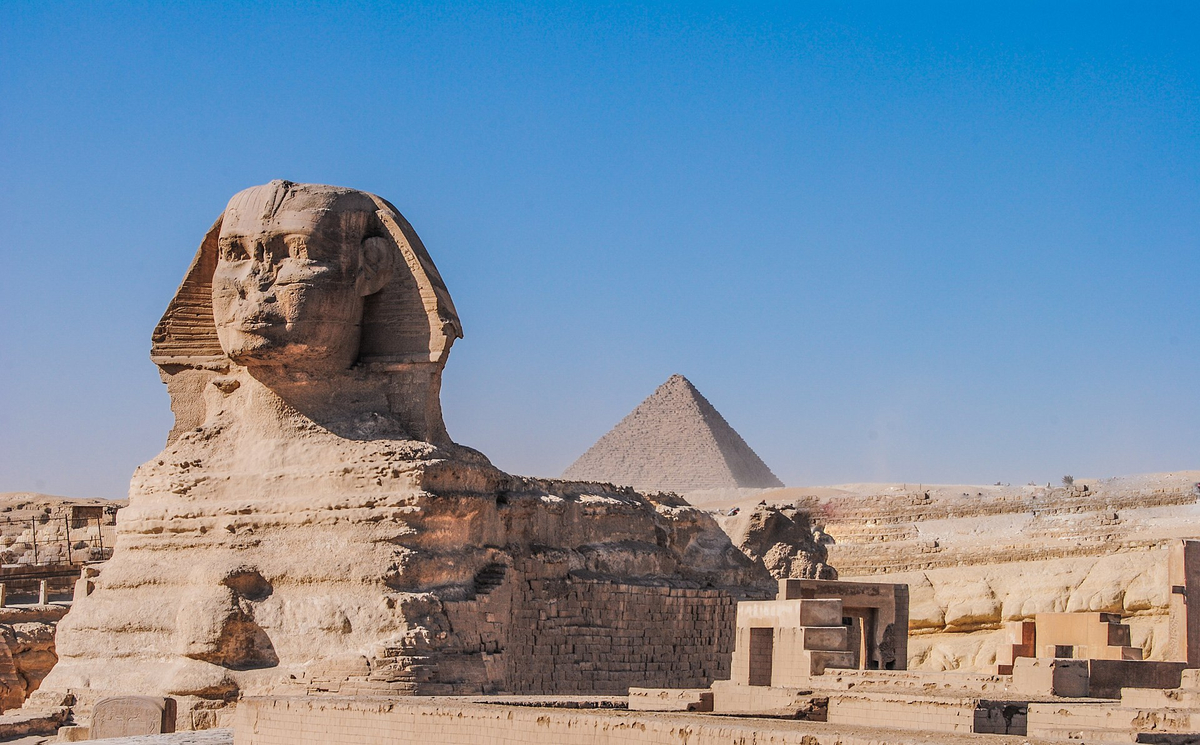
Great Sphinx of Giza carved.
Egypt
3 min read
Updated By: History Editorial Network (HEN)
Published:
Updated:
The Great Sphinx of Giza, one of the most iconic and enigmatic monuments of ancient Egypt, stands majestically on the Giza Plateau, near the Great Pyramids. Carved directly from a single limestone ridge around 2500 BCE, it is believed to represent Pharaoh Khafre, who reigned during the Fourth Dynasty. With the body of a lion and the head of a man, the Sphinx embodies strength and wisdom, acting as a guardian of the sacred necropolis. Measuring approximately 73 meters in length and 20 meters in height, it remains one of the largest and oldest monolithic sculptures in the world.
Despite centuries of study and speculation, the true purpose and symbolism of the Great Sphinx remain partially shrouded in mystery. Some theories suggest it served as a spiritual sentinel, protecting the tombs and temples of Giza, while others believe it played a role in solar worship due to its alignment with the rising sun during the spring and autumn equinoxes. Over millennia, the Sphinx has endured the ravages of time, sand, and human intervention, yet it continues to captivate imaginations with its imposing presence and mythic aura.
\#GreatSphinx #GizaPlateau #AncientEgypt #PharaohKhafre #StoneMonument #EgyptianMythology #SphinxMystery #MomentsOfLife #MoofLife\_Moment #MoofLife
Explore the Life Moments of
 AI Twin