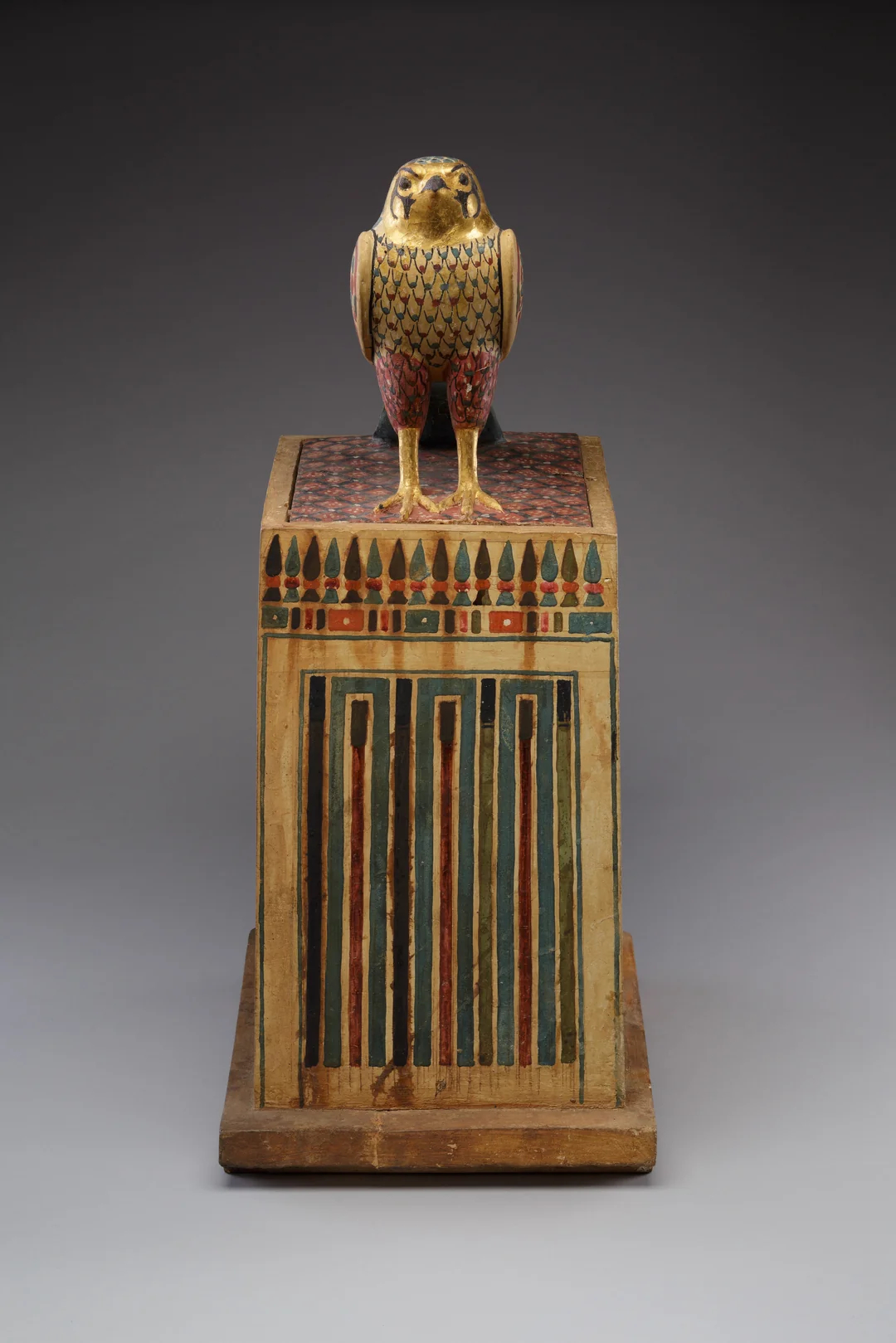
Falcon Box with Wrapped Contents
Egypt
Ancient Egypt
Archaeology
Burial Customs
3 min read
Updated By: History Editorial Network (HEN)
Published:
Updated:
The Falcon Box with Wrapped Contents is an artifact from ancient Egypt, specifically dating between 332 and 30 BC. This period is characterized by the influence of Hellenistic culture following the conquests of Alexander the Great, which integrated various artistic and cultural elements into Egyptian traditions. The falcon, a symbol associated with the sky god Horus, represents protection and the divine, reflecting the deep-seated beliefs in the afterlife that permeated ancient Egyptian society. The box itself was part of elaborate burial customs that were designed to ensure the deceased's immortality. These customs included mummification, the use of amulets, and the placement of various items in tombs to accompany the dead into the afterlife. The practice of wrapping contents within the box indicates a ritualistic approach to death, where the physical remains were treated with great care and reverence.
The impact of such artifacts extends beyond their immediate historical context, as they provide insight in
#mooflife
#MomentOfLife
#AncientEgypt
#BurialCustoms
#FalconSymbolism
#AfterlifeBeliefs
#ArchaeologicalArtifacts
Explore the Life Moments of
 AI Twin