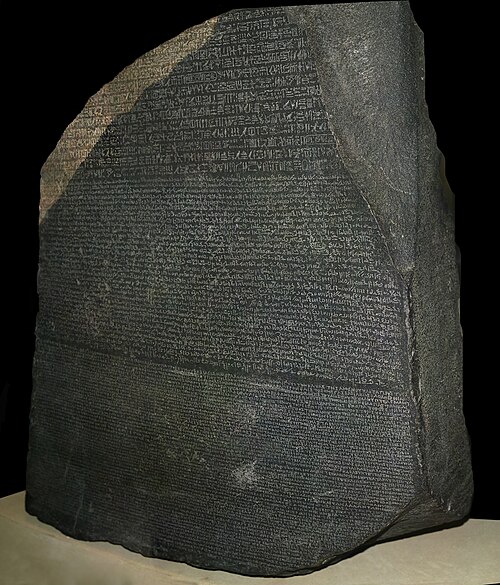
Creation of the Rosetta Stone
Egypt
Historical Artifacts
Linguistics
Ancient Civilizations
4 min read
Updated By: History Editorial Network (HEN)
Published:
Updated:
The Rosetta Stone is an ancient artifact that played a pivotal role in the understanding of Egyptian hieroglyphs. Created in Memphis, Egypt, it features a decree inscribed in three different scripts: Greek, Demotic, and formal hieroglyphs. This unique combination of languages provided a key to unlocking the long-lost knowledge of hieroglyphic writing, which had been largely forgotten after the decline of ancient Egyptian civilization. The stone remained unnoticed for centuries until its rediscovery in the early 19th century, which sparked significant interest among scholars and linguists. The presence of the Greek text, which was understood, allowed researchers to make connections between the known and the unknown scripts, facilitating the decipherment process.
The impact of the Rosetta Stone on the field of Egyptology cannot be overstated. It served as a crucial tool for linguists such as Thomas Young and Jean-François Champollion, who dedicated years to studying the inscriptions. Their efforts culminated in the successful translation of hieroglyphs, which opened up a wealth of knowledge about ancient Egyptian culture, religion, and history. The decipherment of hieroglyphs not only restored a significant part of human history but also laid the groundwork for modern Egyptology. The Rosetta Stone remains a symbol of linguistic and archaeological achievement, illustrating the importance of artifacts in bridging the gap between ancient civilizations and contemporary understanding.
#mooflife
#MomentOfLife
#RosettaStone
#EgyptianHieroglyphs
#AncientArtifacts
#LinguisticDecipherment
#Egyptology
Explore the Life Moments of
 AI Twin