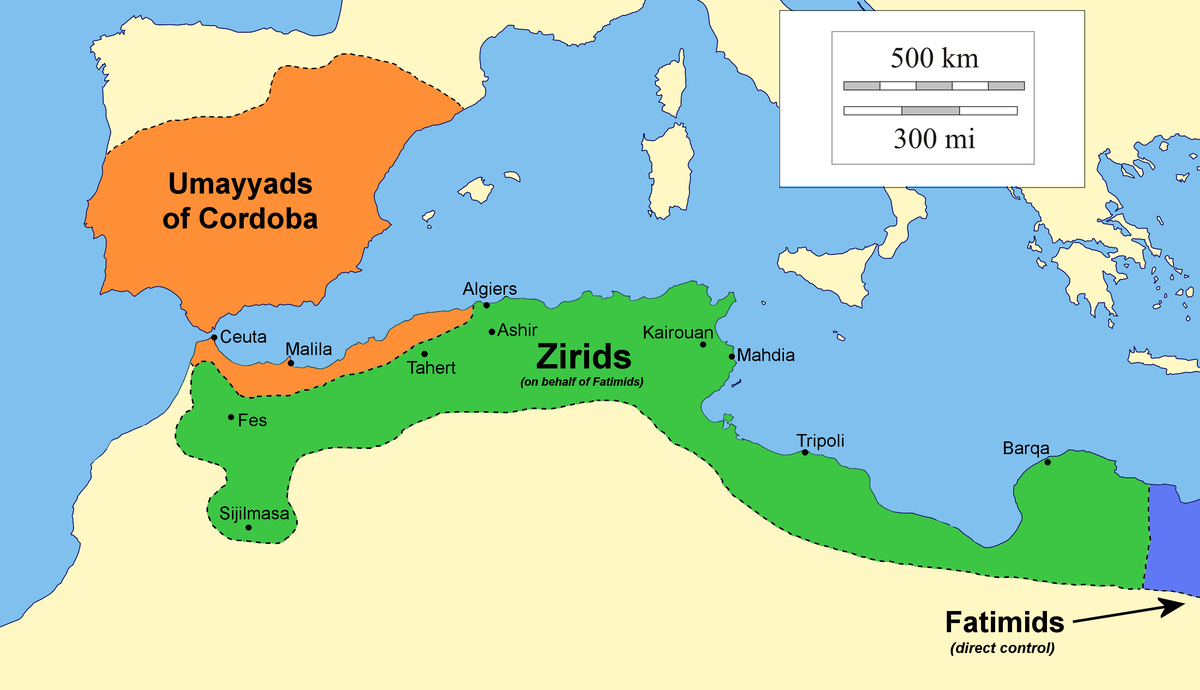
Rise of the Zirid dynasty: Algeria's medieval power and influence in North Africa.
Algeria

Political
Cultural
3 min read
Updated By: History Editorial Network (HEN)
Published:
In 972, the Zirid dynasty was established in Algeria. The Zirids, who were of Berber descent, were appointed as governors by the Fatimid Caliphate in North Africa. They eventually asserted their independence, ruling over a territory that included modern-day Algeria and parts of Tunisia.
The establishment of the Zirid dynasty brought stability and prosperity to the region, with advancements in trade, agriculture, and the arts. They fostered a period of cultural and intellectual growth, with centers of learning and artistic patronage flourishing under their rule.
However, their reign was not without challenges. The Zirids faced pressure from neighboring powers, such as the Fatimids, the Maghrawa, and the Almoravids, which eventually led to their downfall in the 11th century.
Despite their eventual ousting, the Zirid dynasty left a lasting impact on the history and culture of Algeria. Their legacy can be seen in the architecture, literature, and traditions of the region, showcasing the rich heritage of Berber civilization in North Africa.
#ZiridDynasty #AlgerianHistory #BerberCulture #NorthAfrica #CulturalLegacy

Explore the Life Moments of
 AI Twin