E=mc²: Einstein's Revolutionary Equation Linking Mass and Energy in Physics
German
Science
4 min read
Updated By: History Editorial Network (HEN)
Published:
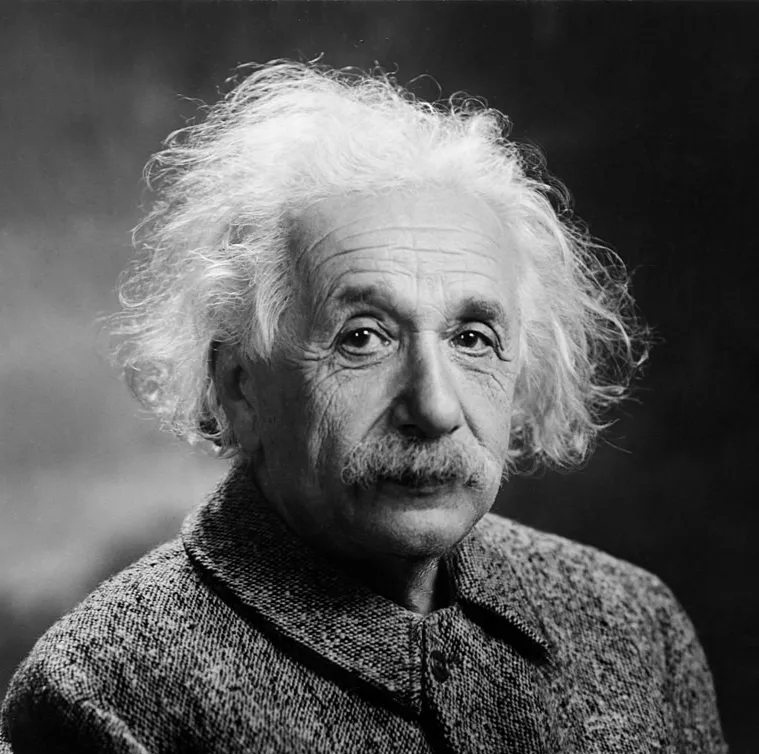
In the early 20th century, the field of physics was undergoing significant revolutionary changes. Albert Einstein, a theoretical physicist, presented a groundbreaking discovery in his paper, 'Does the Inertia of a Body Depend Upon Its Energy Content?'. This paper introduced the equation E = mc², which established the principle of mass-energy equivalence.
Before this publication, the prevailing view in physics maintained a clear distinction between mass and energy. However, Einstein proposed that mass and energy are two forms of the same thing and can be converted into each other. In the equation, E represents energy, m stands for mass, and c denotes the speed of light in a vacuum. This indicated that a small amount of mass could be converted into a large amount of energy, leveraging the enormous value of the speed of light squared.
Einstein's paper provided the theoretical framework that linked the realms of mass and energy, thus extending the implication of the laws of physics. This profound insight not only strengthened the foundation of the theory of relativity but also paved the way for future advancements in various scientific fields, including nuclear physics and cosmology.
The impact of E = mc² extends beyond theoretical physics to practical applications. For instance, it underpins the principles of nuclear power generation and the development of atomic weaponry. Furthermore, understanding mass-energy equivalence has been integral to advancements in particle physics, assisting in the exploration of fundamental particles and forces that comprise the universe.
Overall, Einstein’s presentation of mass-energy equivalence changed the trajectory of modern physics and provided essential knowledge for future technological advancements. #TheoryOfRelativity #Physics #MassEnergyEquivalence #Einstein #MoofLife
Explore the Life Moments of
 AI Twin