Einstein Introduces Photon Concept: Wave-particle duality and foundation of quantum physics.
German
Science
4 min read
Updated By: History Editorial Network (HEN)
Published:
Updated:
Albert Einstein published a paper that introduced the photon concept, laying the foundation for wave-particle duality. This concept was an extension of his earlier work on the photoelectric effect. Einstein proposed that light could be understood as both a wave and a particle. This was a significant departure from the classical wave theory of light, which had dominated physics for decades.
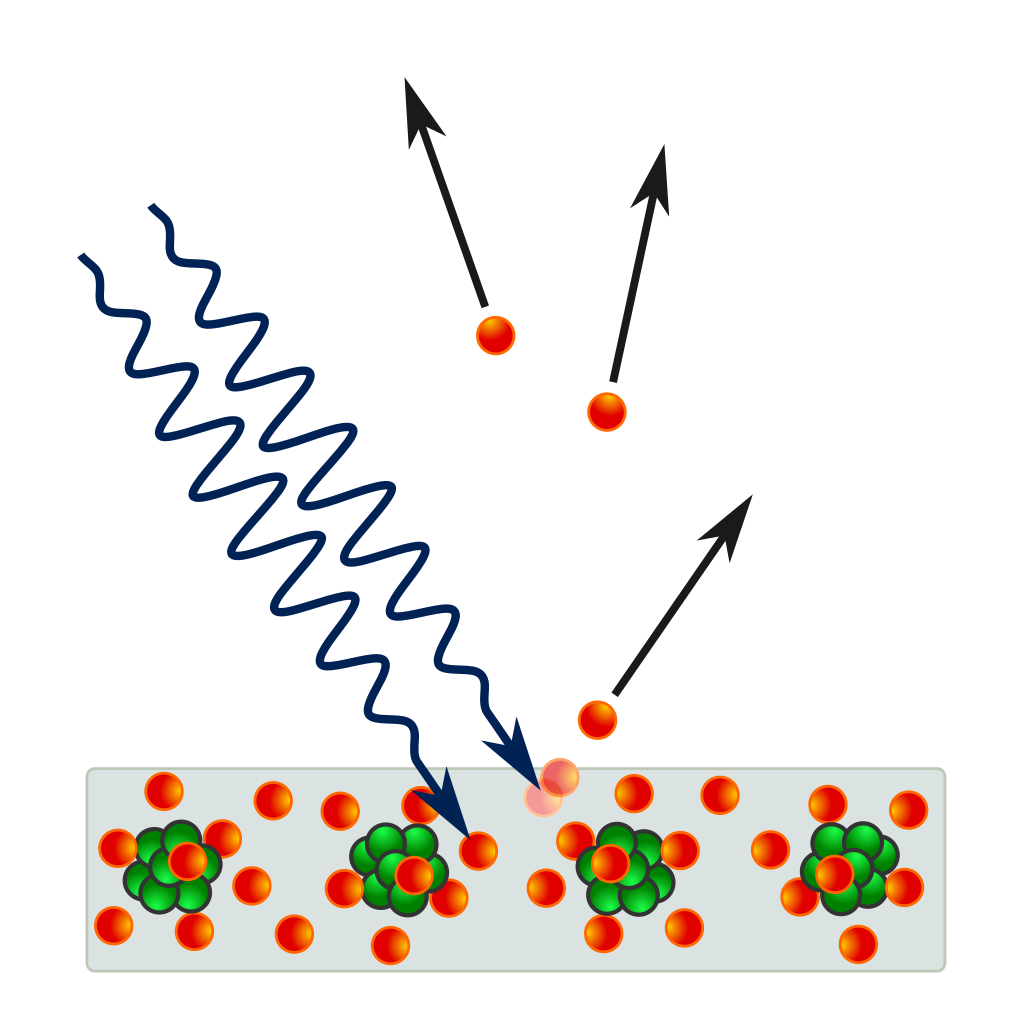
Einstein's theoretical framework suggested that light consists of quanta, or discrete packets of energy, which he termed photons. Each photon carried energy proportional to its frequency. This idea helped explain certain experimental observations that the wave theory could not, such as the photoelectric effect, where light hitting a metal surface ejects electrons.
The publication of this paper was a pivotal development in quantum physics. It provided a new way of thinking about the nature of light and laid the groundwork for future developments in quantum mechanics. Key figures such as Max Planck and Niels Bohr later expanded on these ideas, leading to the formulation of a more complete quantum theory.
Researchers measured the impact of Einstein's photon hypothesis by conducting experiments that validated his theoretical predictions. For example, the Compton effect, discovered by Arthur Compton, showed the transfer of energy from photons to electrons, consistent with Einstein's theory.
The introduction of the photon concept also had practical implications, leading to the development of technologies such as the laser and advances in fields like optical communication. These innovations underscore the profound and lasting influence of Einstein's work on both theoretical and applied physics.
#Physics #QuantumMechanics #AlbertEinstein #PhotonConcept #ScienceHistory #InfluentialPapers #WaveParticleDuality #MoofLife
Explore the Life Moments of
 AI Twin