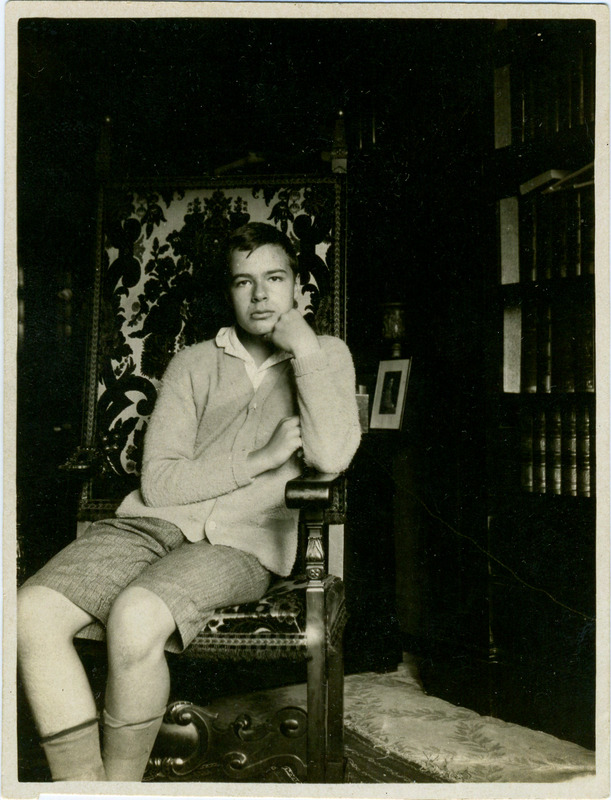
Eduard Einstein: Struggles with Schizophrenia and Family's Heartache
Burghölzli Psychiatric Clinic, University of Zurich, Switzerland
Family
Health
10 min read
Updated By: History Editorial Network (HEN)
Published:
Updated:
Eduard Einstein, the second son of renowned physicist Albert Einstein, faced a significant struggle with mental illness throughout his life. Diagnosed with schizophrenia during his early twenties, Eduard's condition steadily worsened. Despite numerous treatments and interventions, his symptoms remained persistent and debilitating.
Initially, Albert and Mileva Marić, Eduard's mother, sought various methods to alleviate their son's condition, including psychoanalysis and different medical treatments. However, Eduard's schizophrenia proved resistant to these efforts, and his episodes became increasingly severe and unmanageable.
Eventually, Eduard's condition necessitated a level of care that his family could no longer provide at home. He was committed to the Burghölzli Psychiatric Hospital in Zurich, a well-known institution specializing in the treatment of severe mental disorders. This hospital had a history of treating complex psychiatric cases and was staffed with professionals experienced in dealing with conditions like Eduard's.
The decision to commit Eduard to Burghölzli had a profound impact on the Einstein family. Albert, who was residing in the United States, felt deep sorrow and helplessness over the distance and his inability to support his son more directly. Despite his global fame and contributions to science, Einstein encountered a deeply personal challenge that even his great intellect could not resolve.
Eduard remained at Burghölzli for the rest of his life. His struggle with schizophrenia highlighted the limitations of mental health treatments available at the time and underscored the ongoing challenges faced by individuals and families dealing with severe mental illness.
In 1955, the Einstein family faced a profound transition as Albert Einstein passed away in April. At this time, his younger son, Eduard "Tete" Einstein, remained institutionalized in Switzerland, continuing a lifelong struggle with schizophrenia that had permanently altered the family's trajectory.
Eduard’s Condition and Institutional Life:
By 1955, Eduard had lived with schizophrenia for 25 years, having been diagnosed at age 20 following a suicide attempt in 1930.
• Location: He resided at the Burghölzli Psychiatric Clinic at the University of Zurich.
• Impact of Treatments: Eduard’s brother, Hans Albert, believed that the harsh treatments of the era - particularly electroconvulsive therapy - had caused permanent cognitive and memory impairment.
• Daily Life: Despite his illness, Eduard remained a devotee of music, art, and poetry, and he famously kept a portrait of Sigmund Freud on his wall.
Family Heartache and Separation:
• The year 1955 marked the end of a long, painful separation between father and son.
• Thirty-Year Absence: Albert Einstein and Eduard had not seen each other since 1933, when Albert visited the asylum one last time before fleeing Nazi-occupied Europe for the United States.
• The Weight of Guilt: Albert was deeply pained by his son's condition, once writing, "The worst is that Eduard is there alone without a caring hand in his wretched condition". He believed the illness was hereditary, which added to his personal sense of grief.
• Loss of Support: Eduard’s primary caregiver and mother, Mileva Marić, had died seven years earlier in 1948, leaving him without his most dedicated advocate during his final years.
Timeline of Key Events:
• 1910: Eduard Einstein is born in Zurich.
• 1930: Eduard Einstein's First major breakdown and suicide attempt.
• 1933: Eduard Einstein's Last meeting with Albert Einstein before his emigration to the U.S..
• 1948: Death of Eduard Einstein's mother and primary caregiver, Mileva Marić.
• 1955: Death of Albert Einstein in Princeton, NJ.
• What was Eduard Einstein's medical diagnosis?
Eduard Einstein was diagnosed with schizophrenia in 1930 at the age of 20.
• What factors are believed to have caused Eduard Einstein's mental illness?
Albert Einstein believed the condition was hereditary, likely inherited from Eduard Einstein's mother’s side, though modern analysts sometimes suggest Albert’s own schizotypal traits may have contributed.
• Did the psychiatric treatments of the time make Eduard Einstein's condition worse?
Eduard Einstein's brother, Hans Albert, believed that contemporary "cures," specifically electroconvulsive therapy (ECT), caused permanent cognitive and memory damage to Eduard Einstein.
• What was the official cause of Eduard Einstein's death?
Eduard Einstein died of a stroke in the Burghölzli asylum in October 1965 at the age of 55.
• Who were the primary caregivers for Eduard Einstein?
His mother, Mileva Marić, cared for him until her death in 1948; afterward, he lived primarily under institutional care and in foster families.
#Schizophrenia #AlbertEinstein #BurghölzliHospital #FamilyStruggles
#MentalHealth
#EduardEinstein
Explore the Life Moments of
 AI Twin