Bell's Theorem: Exploring Quantum Nonlocality Through Bell's Inequalities
German
Science
4 min read
Updated By: History Editorial Network (HEN)
Published:
Updated:
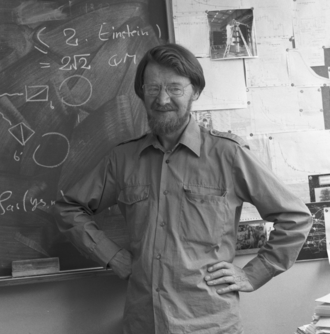
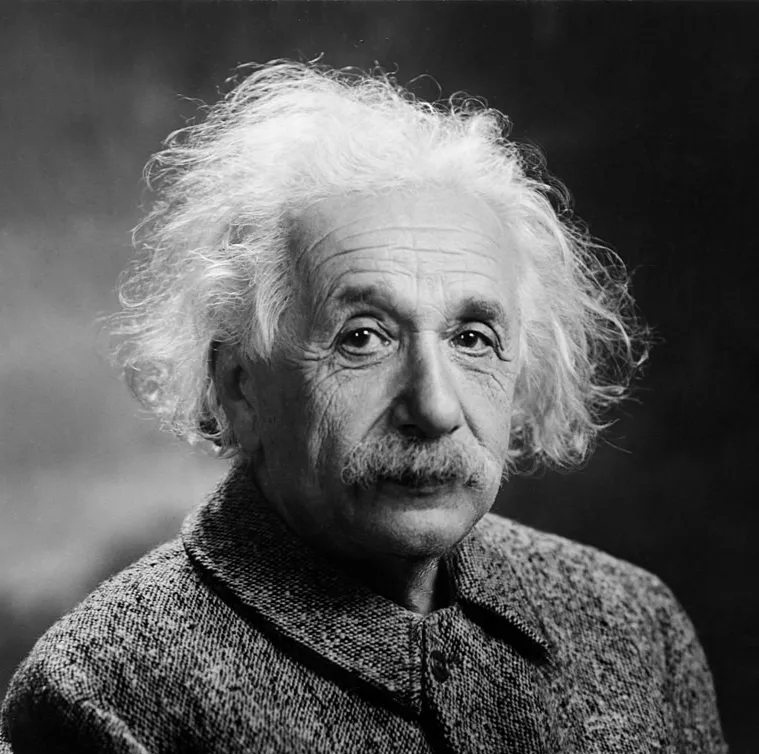
John Stewart Bell, a physicist, developed Bell's theorem to address one of the most thought-provoking questions in the realm of quantum mechanics: the EPR paradox. The EPR paradox, formulated by Albert Einstein, Boris Podolsky, and Nathan Rosen, challenged the completeness of quantum mechanics. They argued that quantum mechanics could not be a complete theory because it allowed for what Einstein famously termed "spooky action at a distance." This action at a distance implied that particles could instantaneously affect each other's states, no matter the distance separating them.
Bell crafted a theoretical framework that led to inequalities, now known as Bell's inequalities. These inequalities provided a method to test the predictions of quantum mechanics against the principle of local realism—the classical idea that objects are only directly influenced by their immediate surroundings. By devising experiment-based criteria, Bell demonstrated that if quantum mechanics were correct, certain statistical correlations would violate these inequalities, thereby defying local realism.
Subsequent experiments conducted by various physicists supported Bell's theorem, validating the nonlocal nature of quantum entanglement. The findings showed that particles behaved in ways that could not be explained by classical physics alone, implying that the quantum realm operates with no regard for local interactions, unlike the macroscopic world.
Bell's theorem has had profound implications for the development of quantum mechanics, quantum computing, and the field of quantum information theory. It has paved the way for research on quantum entanglement and quantum teleportation, enhancing the understanding of how fundamental particles interact at a distance.
#MoofLife #QuantumMechanics #EPRParadox #QuantumNonlocality #BellTheorem #Physics #AlbertEinstein #QuantumEntanglement
Explore the Life Moments of
 AI Twin