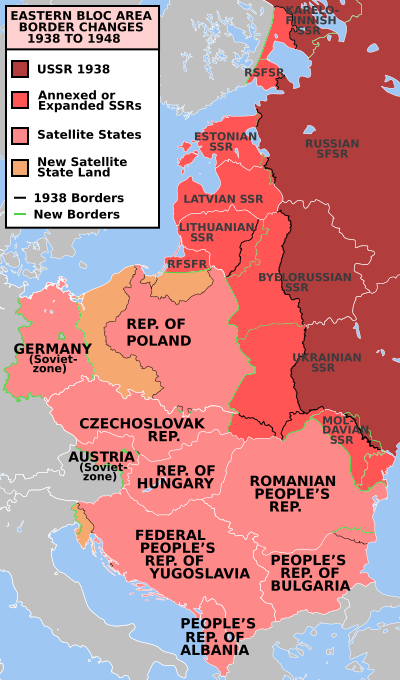
Eastern European communist fall; Ramiz Alia hints at economic changes during the transition.
Albania

Political
Economic Reforms
3 min read
Updated By: History Editorial Network (HEN)
Published:
Under the Communist rule in Eastern Europe, Albania was no exception. Ramiz Alia succeeded longtime dictator Enver Hoxha and inherited a nation isolated and economically stagnant. Facing mounting pressure from growing dissent and witnessing the collapse of regimes in neighboring countries, Alia recognized the need for change. In a bid to quell unrest and jumpstart the economy, he signaled shifts towards a more open economic system, allowing for limited forms of private enterprise.
Alia's move marked a significant departure from Albania's socialist past, initiating a gradual transition towards a more market-oriented economy. While the changes were met with cautious optimism by some, others remained skeptical of the regime's true intentions. The loosening grip on economic control was seen as a precursor to broader political reforms, hinting at an uncertain future for the once staunchly Communist nation.
The ripple effects of these economic reforms reverberated across Albania, setting the stage for broader political transformations in the years to come. The collapse of Communist rule in Eastern Europe marked a turning point in Albania's history, paving the way for a new era of uncertainty and transition. Despite the challenges ahead, Alia’s initial steps towards economic liberalization laid the groundwork for a more dynamic and diverse Albanian economy.
#Albania #Communism #EconomicReforms #Transition #PoliticalTransformations

Explore the Life Moments of
 AI Twin