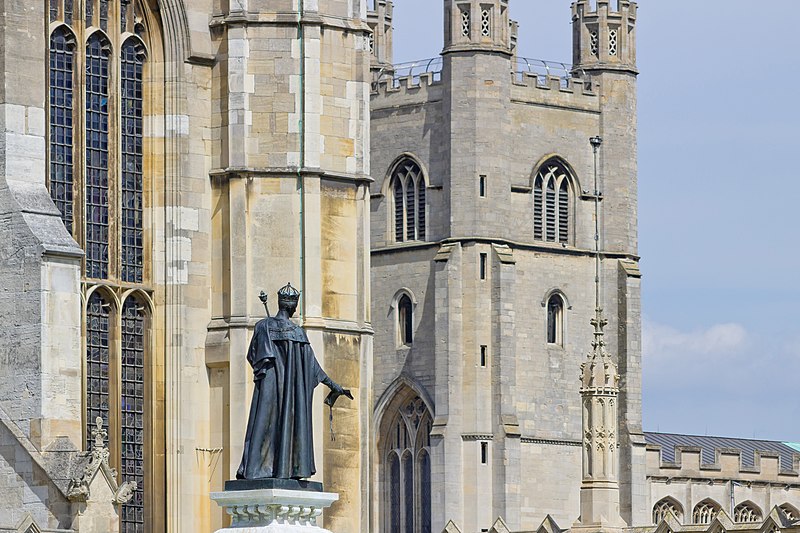
Turing became a Fellow at King's College
United Kingdom
Computer Science
Mathematics
3 min read
Updated By: History Editorial Network (HEN)
Published:
Updated:
Alan Turing, a prominent mathematician and logician, became a Fellow at King's College, Cambridge, after completing his undergraduate studies there. His time at King's College was marked by significant intellectual development, particularly in the field of mathematics and logic. Turing's work laid the groundwork for modern computer science, and his contributions to the field were recognized early in his career. As a Fellow, he engaged in advanced research and collaborated with other scholars, further enhancing his understanding of mathematical concepts. Turing's return to Cambridge also allowed him to attend lectures by Ludwig Wittgenstein, a notable philosopher, which influenced his thinking about the foundations of mathematics. Turing's association with King's College continued to be honored, as the computer room at the college was named after him, reflecting his lasting impact on the institution and the field of computing. His work during this period contributed to the development of theoretical computer science and artificial intelligence, establishing him as a key figure in these disciplines. Turing's legacy is evident in the ongoing relevance of his ideas and the recognition of his contributions to mathematics and computing, which continue to shape contemporary research and technology.
#mooflife
#MomentOfLife
#AlanTuring
#King'sCollege
#Cambridge
#ComputerScience
#Mathematics

Explore the Life Moments of
 AI Twin