Publication of 'The Chemical Basis of Morphogenesis'
United Kingdom
Mathematics
Biology
Chemistry
4 min read
Updated By: History Editorial Network (HEN)
Published:
Updated:
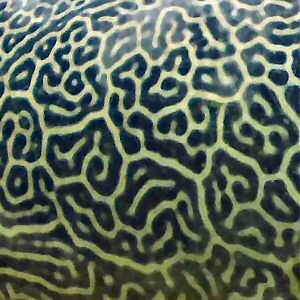
Alan Turing, known for his contributions to computer science and mathematics, shifted his focus to mathematical biology, culminating in the publication of 'The Chemical Basis of Morphogenesis'. This work explored the concept of morphogenesis, which refers to the biological processes that lead to the formation of patterns and shapes in living organisms. Turing proposed a theoretical framework involving a reaction-diffusion system, where a set of chemicals interact and diffuse through space, leading to the emergence of complex patterns. This idea was groundbreaking as it provided a mathematical explanation for how simple chemical processes could result in the intricate structures observed in nature, such as the stripes on a zebra or the spirals of a shell.
In 'The Chemical Basis of Morphogenesis', Turing employed systems of partial differential equations to model these catalytic chemical reactions. His approach laid the groundwork for future research in developmental biology and has influenced various fields, including genetics and evolutionary biology. The impact of Turing's work extends beyond biology; it has implications in areas such as physics and chemistry, where reaction-diffusion systems are studied. Turing's insights have inspired a multitude of studies aimed at understanding pattern formation in biological systems, demonstrating the interdisciplinary nature of his contributions. The publication is regarded as a pivotal moment in the intersection of mathematics and biology, highlighting the potential of mathematical models to explain complex biological phenomena.
#mooflife
#MomentOfLife
#AlanTuring
#Morphogenesis
#MathematicalBiology
#Reaction-diffusionSystem
#PatternFormation

Explore the Life Moments of
 AI Twin